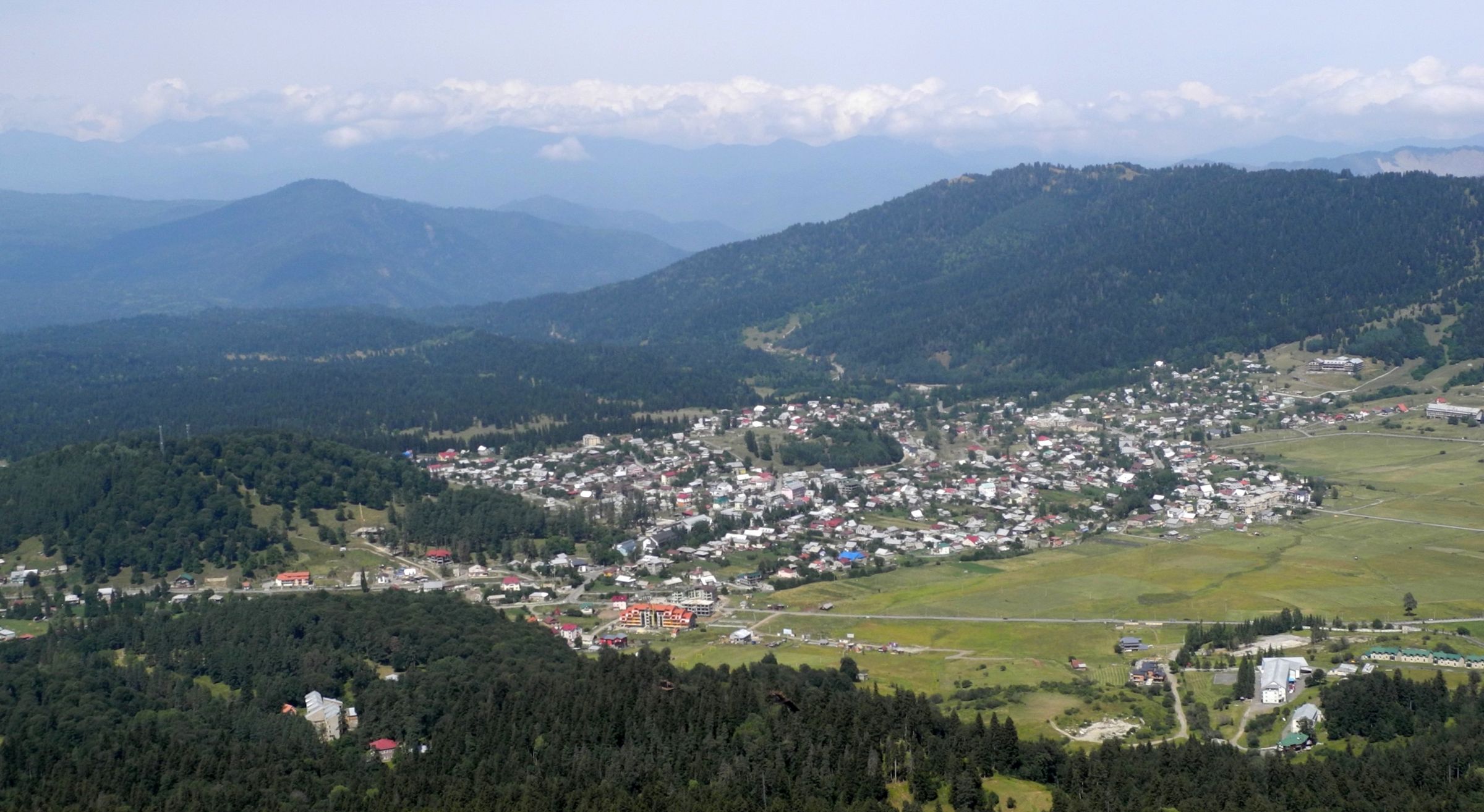
Bakuriani
Where Soviet ski dynasties learned to fall softly

A country of vineyards, watchtowers and high Caucasus light — told slowly, booked with care.
This corridor of Samtskhe-Javakheti strings together three very different experiences along one road: Borjomi's Romanov-era spa town and forested national park, Bakuriani's gentle ski slopes 40 minutes up the valley, and the 12th-century cave city of Vardzia further south near Akhaltsikhe. Most visitors base in Borjomi and make Vardzia a long day trip, adding Bakuriani in winter for skiing or Akhaltsikhe's Rabati Castle any season.
This corridor rewards travellers who treat it as three distinct trips rather than one — the spa-town rhythm of Borjomi, the mountain stronghold and cave-city history around Akhaltsikhe, and Bakuriani's ski culture each stand on their own, and cramming all three into a single day trades away what makes each worthwhile.
The atlas holds 58 documented wonders here — bridge, canyon, cave, church, fortress, lake, monastery, monument. Base yourself in Borjomi and radiate outwards; nothing below is more than a day away.
Begin with these — then wander. Each card is a doorway, not a checklist.
Where Soviet ski dynasties learned to fall softly
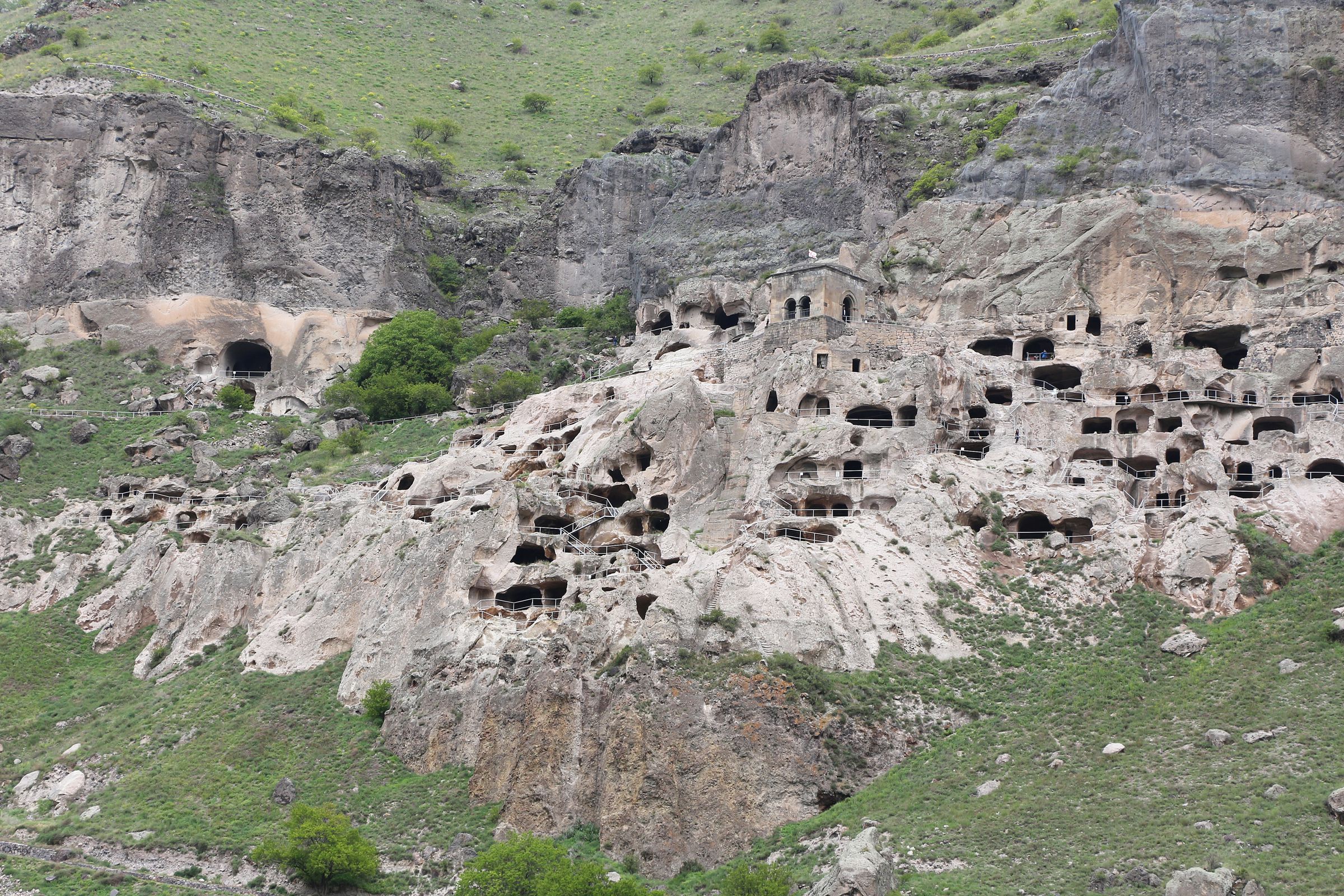
A mountain hollowed into sanctuary
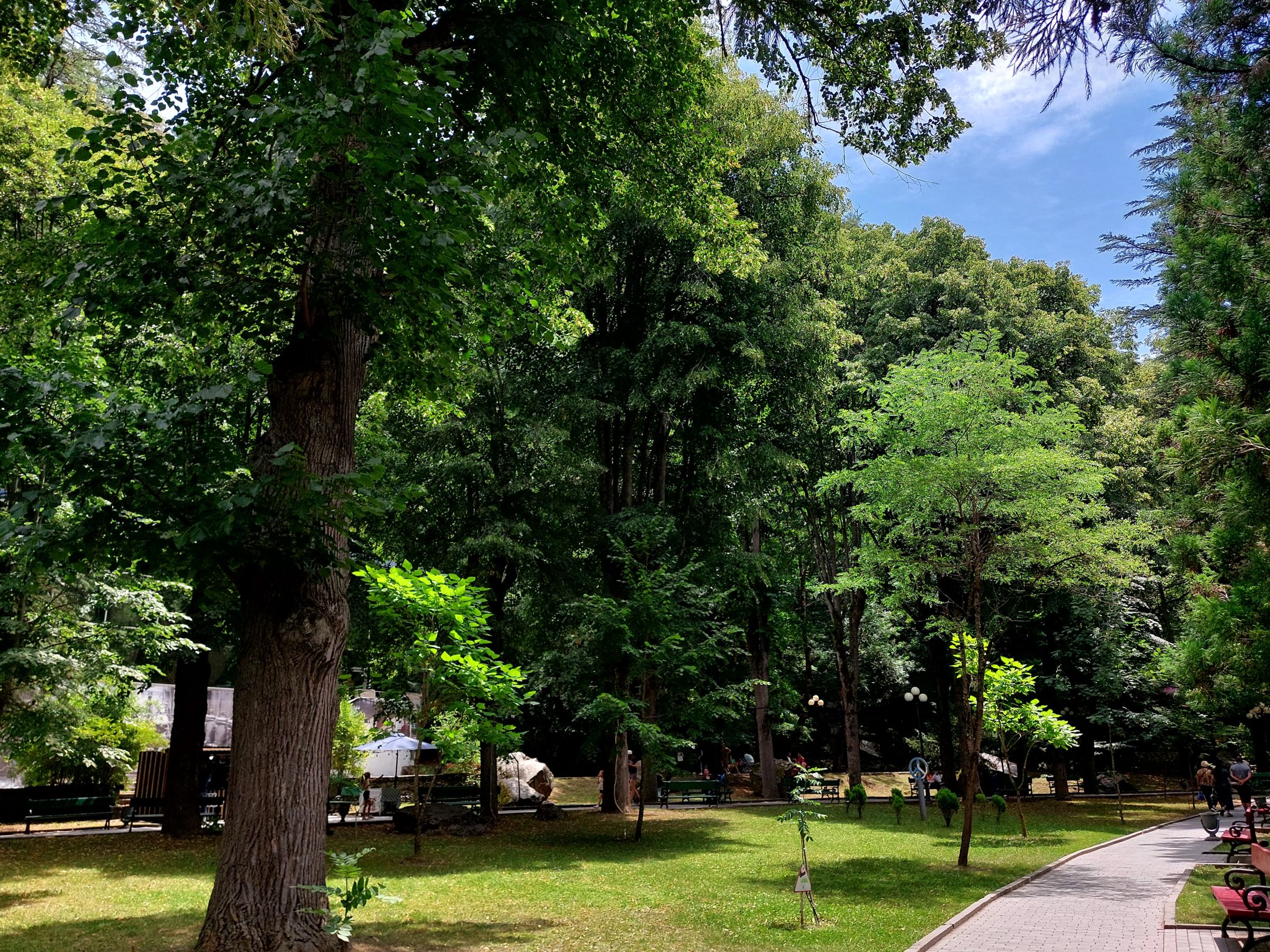
Sip the water that built an empire
Where Georgian stone outlasts empires
A cliff-face kingdom carved for a queen
Stone poetry in Georgia's highland silence
Where the plateau surrenders to sky
Where empires came to drink
Bakuriani's snowy crown since Soviet times
Stone stillness above the pines
Where cliffs breathe with medieval prayer
Healing waters in the Caucasus pines
Curated, not crowded. Our editors’ orders of merit — updated with the seasons.
Borjomi — arrivals, markets and the best spread of places to sleep.
Every wonder below is pinned on the national atlas with live availability beside it.
Every booking removes one tonne of CO₂ — folded in, never added at the end.
Borjomi is roughly 90 minutes from Tbilisi Central Station by train, with the town itself walkable end to end. The Borjomi-Bakuriani narrow-gauge 'Kukushka' railway runs a scenic 2.5-hour route between the two, though marshrutkas cover the same ground faster, in about 45 minutes; Akhaltsikhe is reached from Tbilisi by marshrutka in around 4 hours, or from Borjomi in under two. A car or organised tour is genuinely useful for Vardzia, Khertvisi, and Sapara, none of which sit directly on marshrutka routes. May through October is the strongest window for the springs, national park trails, and the cave city; December through March is ski season in Bakuriani, when Vardzia and the park trails are largely inaccessible or snowbound. Entry to the national park requires a free permit from the Borjomi or Kharagauli visitor centres; Rabati Castle and Likani Palace both charge modest entrance fees.
Yes, but not in a single day. Borjomi works as a base for a Vardzia day trip (via Khertvisi and Rabati) and a separate Bakuriani excursion, so plan on at least three days to cover the corridor without rushing.
It's possible with a car or an organised tour, since Akhaltsikhe — the practical base for Vardzia, Khertvisi, and Sapara — is under two hours from Borjomi, but it makes for a long day. Some travellers prefer an overnight in Akhaltsikhe to see the fortress sites unhurried.
Late June through September, when the Alpine Botanical Garden is in bloom and the ski-slope terrain opens up for hiking and mountain biking without snow.
Not for Borjomi or Bakuriani, both reachable by train or marshrutka with everything walkable once you arrive. Vardzia, Khertvisi, and Sapara are much easier with a car or a tour, since none sit on a direct public transport route.
For the scenery, yes — the narrow-gauge Kukushka line climbs through forest that the road doesn't parallel closely, though it takes roughly three times longer than the marshrutka, so it suits travellers for whom the ride is part of the point.
High passes, wine roads, and the slow coast — open the national atlas and plot a generous route.
See Borjomi, Vardzia & Bakuriani on the atlas →Late spring and September–October bring harvest light, open high roads, and terrace weather. Winter is for ski villages and sulphur baths; high summer belongs to the Black Sea. Shoulder months reward the unhurried.
Many travellers enter visa-free for a generous stay. Always confirm current entry rules for your passport before you book — then spend the saved hour on a long lunch.
Marshrutka minibuses, comfortable coaches, a handful of trains, and hired drivers cover most ground. Mountain roads ask for daylight and patience. Build slack into every itinerary.
Every booking removes 1 tonne of CO2 — no surcharge. It is included, not optional, and never an excuse to travel carelessly. Stay longer; spend locally; tread lightly on alpine meadows.
In cities and guesthouses, yes — and a few words of Georgian open every door. Look for the script; it is part of the landscape. Menus often arrive in three languages, like this site.
25 August 2026 · reviewed quarterly