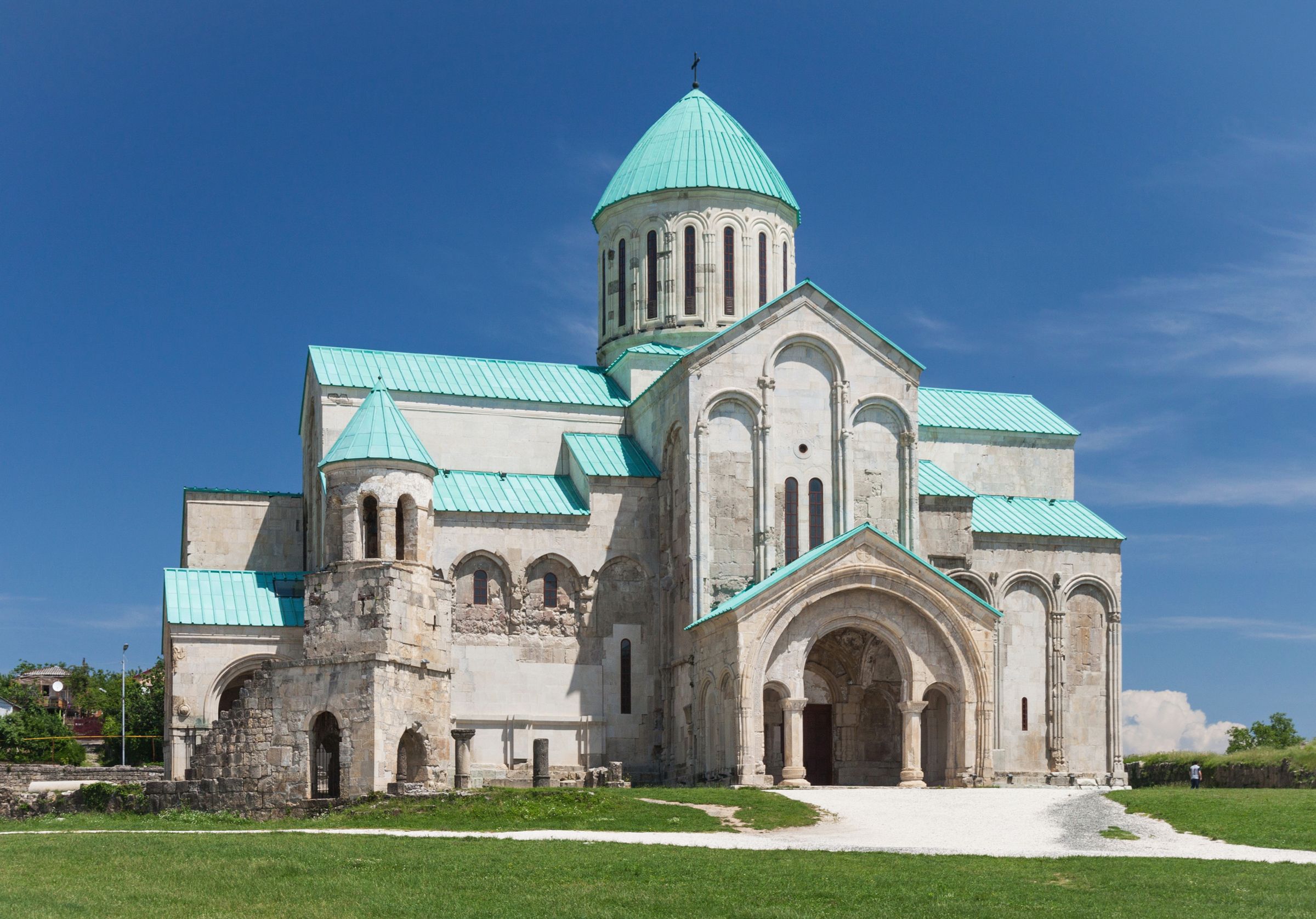
Why go
Gelati Monastery rises above the Tskaltsitela valley as the crowning achievement of King David IV, known as David the Builder, who founded it in 1106 to celebrate Georgia's golden age and unify church and learning. This wasn't merely a place of worship—David established it as a renowned academy of theology, philosophy, and sciences, deliberately positioning it as the intellectual heart of his revitalized kingdom. The interior gleams with extraordinary 12th-century mosaics, particularly the towering Virgin and Child in the apse of the Church of the Virgin, executed by Byzantine masters whose gold tesserae still catch candlelight after nine centuries. The fusion of spiritual ambition, political purpose, and surviving artistic mastery makes Gelati an unparalleled window into medieval Georgia's brilliance.