Pheasant's Tears Winery
Best for hands-on grape treading and a full harvest crew
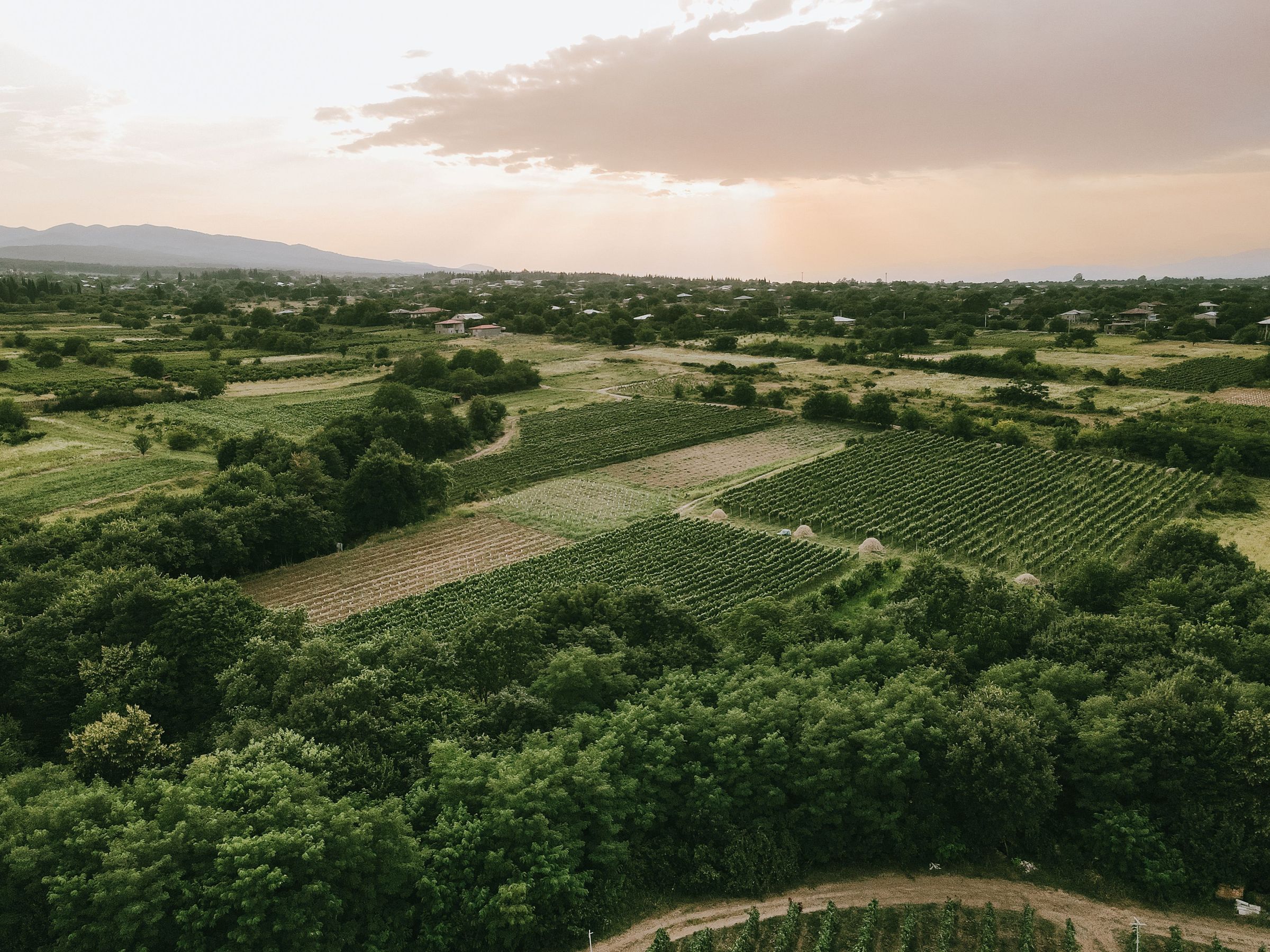
Founded in 2007 by American painter-turned-winemaker John Wurdeman, Pheasant's Tears has done more than most to put Sighnaghi's qvevri revival on the international map. During rtveli the winery's marani becomes a working harvest scene: baskets of hand-picked Rkatsiteli and Saperavi arrive from the vineyard, and visitors who book ahead can join the crew treading grapes in the old wooden vats before the must goes into buried clay qvevri to ferment skin-on for months, the amber-wine method now on UNESCO's intangible heritage list. The winery occupies a restored 19th-century house, and the tasting that follows a harvest session usually runs into a full Kakhetian meal at the long table out back. September and October fill up fast, so a reservation two to three weeks out is the difference between joining the crush and watching it from the doorway rather than being handed a basket yourself.
Okro's Wines
Best for an intimate, family-run harvest
Okro's is small on purpose. Zurab and his sons have made natural qvevri wine here since 2004, farming organically and fermenting with minimal intervention, and during harvest the whole operation is family-scale — no coach parties, no fixed script. Visits run by appointment, and calling ahead matters doubly at rtveli because the family may genuinely be out in the vineyard when you arrive. What you get in exchange is the real texture of a household harvest: Zurab or one of his sons walking you through why this particular parcel came in today, how long the skins stay in contact, and what the vintage is shaping up to taste like, before pouring straight from vessels most producers wouldn't open for a stranger. It's the closest this list gets to being invited into someone's actual harvest rather than a program built for visitors.
Twins Wine Cellar
Best for a multi-generational cellar and its own harvest museum
In the village of Napareuli, brothers Gia and Gela Gamtkitsulashvili run a marani that's been in their family for generations, and their own visiting notes point straight at rtveli as the best time to come. Dozens of qvevri sit buried underground in the traditional pattern, and the attached Museum of Viticulture and Ethnography — pressing tools, storage vessels, harvest implements going back generations — gives useful context before or after you watch (or join) the day's crush. Tastings need to be arranged in advance, and during September and October that means booking further out than the rest of the year, since the family's attention is rightly on the vines rather than the calendar. Napareuli sits off the main Telavi–Kvareli road, so a car or arranged taxi makes the visit far easier than trying it by marshrutka, especially if you're carrying the appetite for the meal that usually follows a tasting here.
Alaverdi Monastery
Best for pairing harvest with Georgia's deepest wine history
Alaverdi's monks have made wine for the better part of a millennium, and the monastery's own guidance names autumn rtveli specifically as when the Alazani Valley below it comes alive. The 11th-century cathedral — at 55 metres, once the tallest church in the Caucasus — rises directly above vineyards the monastery still tends, and the working cellar beneath the complex keeps the qvevri tradition going as a living practice rather than a museum piece. This isn't a winery that runs harvest programs for visitors the way a commercial estate does; the value here is in timing your visit for September or October, watching the valley's vines turn gold from the monastery grounds, and taking the short trip into Telavi afterward for a cellar that will let you get hands-on. Open daily 9am–6pm, roughly 20 kilometres from Telavi by taxi or marshrutka.
Tsinandali Estate
Best for a grander, garden-estate harvest atmosphere
Tsinandali is where Georgian wine first went European: Prince Alexander Chavchavadze built the country's first cellar-aged, internationally exported wine here in the 19th century, and the restored palace with its English gardens still frames the estate's vineyards below. During harvest the grounds carry a different energy than the rest of the year — pickers moving through the rows the prince himself once walked, the original cellar still holding wine — and the estate's guided tours (best booked ahead, English-speaking guides available) can be timed to catch the picking itself rather than just the finished bottle. It's a more polished, less hands-in-the-vat experience than the small Sighnaghi cellars, which makes it the better choice if you want harvest atmosphere alongside architecture, a museum, and gardens rather than a full day of physical work. Chavchavadze's salon once hosted Pushkin and Griboyedov, and that literary weight still sits over the estate even mid-harvest, giving the visit a different texture than a working farm.
Kakhetian Traditional Winemaking
Best for watching the qvevri actually get filled
This Telavi operation exists to keep the 8,000-year qvevri method going as working practice, burying vessels underground exactly as Georgians have for millennia and fermenting grapes with stems, skins, and seeds intact for months. Its own visiting notes single out September–October as when crushing and qvevri-filling actually happen, which makes it one of the more reliable places on this list to see — not just hear about — the moment must goes into clay. Tours run by appointment year-round, but the harvest window is when the process is live rather than explained after the fact. It pairs naturally with a base in Telavi, since it sits inside the town rather than requiring a separate excursion, and it's a sensible first stop before venturing out to the smaller village cellars, since seeing the qvevri filled here gives useful context for what you're watching everywhere else on the wine route.
Khareba Winery
Best for a cool break from fieldwork inside a Soviet wine tunnel
Khareba's defining feature has nothing to do with vines: a 7.7-kilometre tunnel bored into the Caucasus foothills in 1962 for Soviet strategic wine reserves, repurposed in 2005 and held at a constant 12–14°C. After a morning in the sun watching or joining a harvest elsewhere in Kvareli, the tunnel's rows of oak barrels and tasting alcoves make for a genuinely different kind of wine experience — one built on constant temperature and humidity rather than open-air tradition. It's less about participating in the harvest directly and more about understanding how Kakheti ages what the harvest produces; book ahead for an English-guided tour and, if timing allows, the barrel-room dinner. A useful anchor for a Kvareli day rather than the main event of a rtveli trip, and a welcome change of pace if a hot September afternoon in the vineyard has left you wanting shade and a steady 13 degrees for an hour.