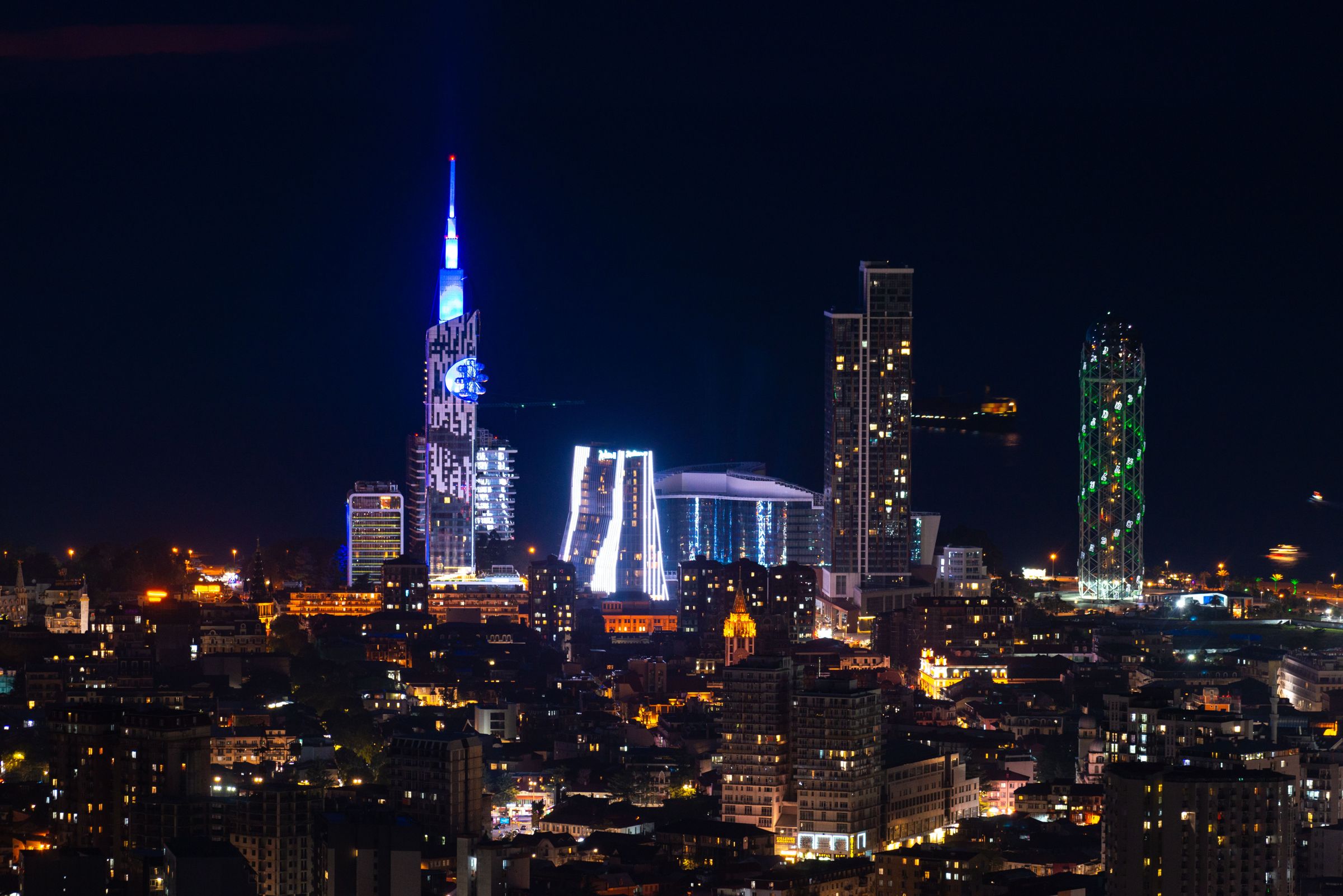
Batumi Boulevard

Where the Black Sea meets art nouveau dreams

Batumi Boulevard

Batumi Boulevard unfurls for seven kilometers along Georgia's subtropical coast, born in 1884 when Governor Mikhail Vorontsov ordered a tree-lined promenade for the expanding port city's elite. What began as a modest walkway for Russian officers and their families grew through Soviet decades into a showcase of socialist leisure architecture, then exploded after 2010 into one of the most ambitious waterfront transformations in the post-Soviet world. The boulevard matters because it distills Batumi's identity: a place that has always looked outward to sea while reinventing itself through successive empires. Strolling its length, you witness layers of ambition—from original magnolia plantings to kinetic sculptures to the absurd, magnificent Alphabetic Tower—each regime adding its vision of pleasure to the same stretch of coast.

On the ground See

  • The Dancing Fountains at night, where 150 jets synchronize to Georgian polyphony and Western pop in performances every evening from May through October
  • The Boulevard's original 1930s colonnade sections near the old port, where Soviet-era mosaics and tea pavilions survive amid the neon
  • The moving sculpture 'Ali and Nino' by Tamara Kvesitadze, two 7-meter aluminum figures that slowly merge and separate through a 10-minute mechanical cycle based on Kurban Said's tragic novel

Practical Know before you go

Best visited May through October when fountains operate and beach cafes are open; the full 7km route takes roughly 90 minutes to walk, or rent bicycles from multiple stations along the path.

Last reviewed 25 August 2026 · reviewed quarterly