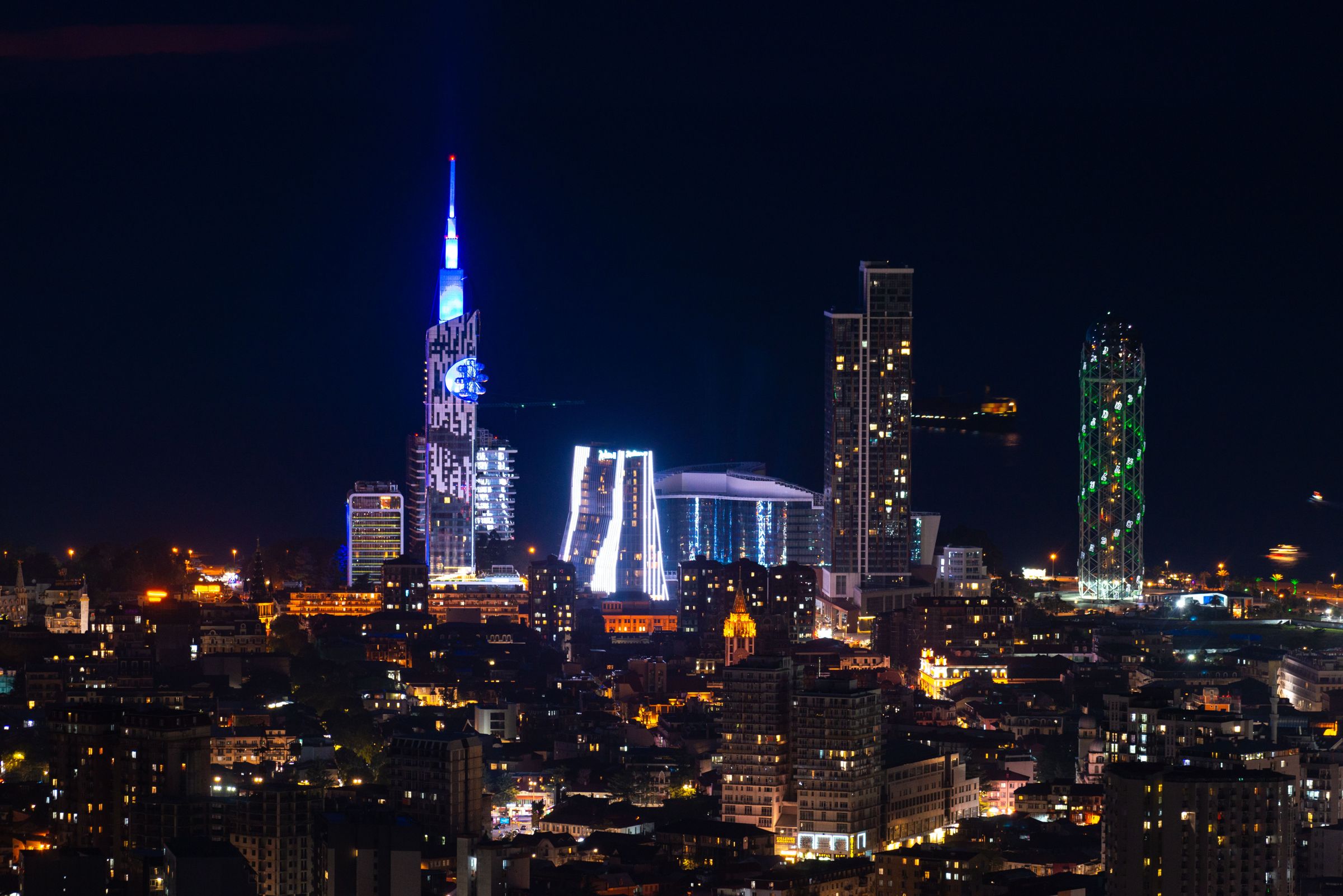
Batumi
Where mountains meet the sea in style
A country of vineyards, watchtowers and high Caucasus light — told slowly, booked with care.
Adjara is Georgia's Black Sea coast and its subtropical hinterland, anchored by Batumi — a small city with a big seven-kilometre boulevard, a Roman fortress at its edge, and rain-soaked national parks climbing into the Lesser Caucasus behind it. Base yourself in Batumi for two to four nights, take one day for the coast south to the Turkish border and one for the mountains inland, and you'll cover the region's real range: ancient ruins, clear diving water, and rainforest most visitors never expect to find in Georgia.
Adjara packs more contrast per kilometre than any other coastal region in Georgia: a Roman fortress, a Soviet health-resort beach, and genuine untouched rainforest all sit within an hour of a single city, so the reward here goes to travellers who leave the boulevard for at least one full day rather than treating Batumi as a beach town alone.
The atlas holds 46 documented wonders here — beach, bridge, church, fortress, monastery, monument, museum, park. Base yourself in Batumi and radiate outwards; nothing below is more than a day away.
Begin with these — then wander. Each card is a doorway, not a checklist.
Where mountains meet the sea in style
Nine worlds, one breathtaking hillside
Where Ottoman grace meets Black Sea breeze
Where Colchis gold still gleams
Where the Black Sea meets art nouveau dreams
Where wooden chalets meet alpine silence
Where the Black Sea breathes underwater
A hidden 13th-century jewel of Adjara's highlands
Where the sea meets the sky in slow rotation
Where gunsmiths forged five centuries of fire
Where oil barons built a Black Sea empire
Where the Black Sea meets the Caucasus
Curated, not crowded. Our editors’ orders of merit — updated with the seasons.
Batumi — arrivals, markets and the best spread of places to sleep.
Every wonder below is pinned on the national atlas with live availability beside it.
Every booking removes one tonne of CO₂ — folded in, never added at the end.
Batumi has its own international airport with seasonal European connections, plus frequent minibuses (marshrutky) and an overnight train from Tbilisi, roughly five to six hours by road. Swimming season runs late June through September; the shoulder months of May and October suit hiking, the botanical garden, and the wine cellars around Keda without summer crowds, though Mtirala and Machakhela see heavy rain year-round and are best attempted with waterproof layers regardless of season. The Sarpi border crossing to Turkey operates for both pedestrians and vehicles if you're continuing overland. Adjara's coastal towns get noticeably busier in July and August, when Georgian domestic tourism peaks alongside international visitors.
Yes, from roughly late June through September the water is comfortable for swimming; outside that window it's cool but the boulevard and beaches still make for a good walk.
You can reach Batumi, Gonio, and Kobuleti without one, but Mtirala, Machakhela, and Makhuntseti Waterfall are far easier with a rental car or a hired driver for the day, since public transport into the mountain valleys is thin.
Yes — Kvariati's steeper coastline gives noticeably clearer water than Batumi's city beaches, and the established dive operators there run from May through October.
Yes, the Sarpi border crossing just south of Batumi handles both pedestrian and vehicle crossings into Turkey and is a short trip from the city.
Yes — the botanical garden, Gonio Fortress, the Old Town, and inland day trips to the waterfalls and wine cellars around Keda all work well in the shoulder months, and the city is far quieter than in July and August.
High passes, wine roads, and the slow coast — open the national atlas and plot a generous route.
See Adjara & the Black Sea on the atlas →Late spring and September–October bring harvest light, open high roads, and terrace weather. Winter is for ski villages and sulphur baths; high summer belongs to the Black Sea. Shoulder months reward the unhurried.
Many travellers enter visa-free for a generous stay. Always confirm current entry rules for your passport before you book — then spend the saved hour on a long lunch.
Marshrutka minibuses, comfortable coaches, a handful of trains, and hired drivers cover most ground. Mountain roads ask for daylight and patience. Build slack into every itinerary.
Every booking removes 1 tonne of CO2 — no surcharge. It is included, not optional, and never an excuse to travel carelessly. Stay longer; spend locally; tread lightly on alpine meadows.
In cities and guesthouses, yes — and a few words of Georgian open every door. Look for the script; it is part of the landscape. Menus often arrive in three languages, like this site.
25 August 2026 · reviewed quarterly