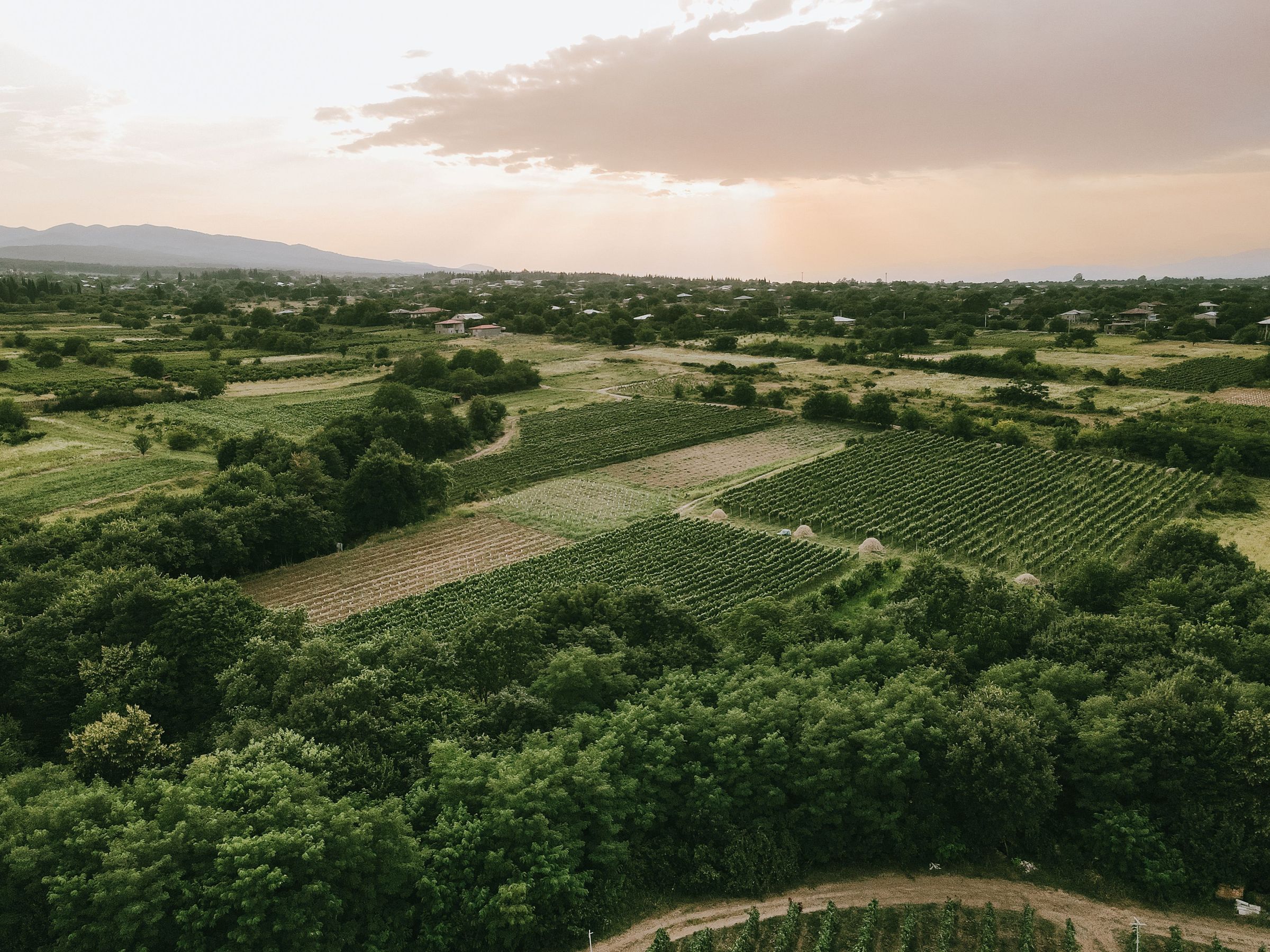
Kakheti's wine villages — Sighnaghi, Telavi & Tsinandali
Best for catching the new vintage as it settles
By November, Kakheti's grape harvest (rtveli) is long finished and the valley's qvevri — the buried clay vessels central to Georgia's 8,000-year winemaking tradition — are sealed and fermenting quietly underground. This is the tradition's quieter half: instead of September's grape-crushing crowds, cellars around Sighnaghi, Telavi and the Tsinandali Estate are calmer, staff have more time to talk through the method, and the first cloudy pours of young wine start appearing on family tables, a custom that culminates around St. George's Day on 23 November. Sighnaghi's hilltop walls and fortress ring stay open and photograph beautifully in low autumn light with none of the summer coach groups; Tsinandali Estate's gardens and museum run year-round regardless of season. Expect cooler mornings across the Alazani Valley and shorter tasting-room hours at the smallest family cellars, so it pays to call ahead rather than simply turning up, but the region's core appeal — the wine, the valley views, the 11th-century Alaverdi Monastery above the vines — is undiminished.
Tbilisi Old Town & the Sulfur Baths
Best for a low-key city break
Tbilisi doesn't have a season — the domed sulfur bathhouses of Abanotubani run year-round, 8am to midnight, and a cold November afternoon is arguably the best time to book a private room and sit in mineral-hot water while it rains outside. The Old Town's narrow lanes, Narikala Fortress above the city, and the Bridge of Peace across the Mtkvari all read differently without August's heat and tour-group density: café terraces empty out, museum queues disappear, and Rustaveli Avenue's grand 19th-century façades are easier to actually look at. This is also when Tbilisi's restaurant and wine-bar scene is most itself, since much of it caters to locals rather than seasonal visitors. Layer up for evenings — the temperature drops fast after sunset — and treat the city as a base for day trips to Mtskheta's churches and Jvari Monastery, both a short marshrutka ride away and equally unaffected by the calendar.
Vardzia's cave city
Best for a major sight with almost nobody else on the cliff
Vardzia is a 12th-century cave monastery carved hundreds of chambers deep into a cliff face above the Mtkvari River for Queen Tamar — one of Georgia's genuine wonders, and one that draws serious coach traffic between May and October. By November that traffic has thinned to almost nothing, and walking the exposed stone stairways and tunnels between chapel, refectory and wine cellar without a queue changes the experience completely. The site stays open through the cooler months; what changes is the light, which sits low and gold across the cliff face for most of the day rather than flattening out at midday as it does in summer. The approach from Akhaltsikhe via the fortress town of Khertvisi is a scenic hour's drive, best arranged privately or through a guesthouse rather than relying on the infrequent marshrutka connection, which thins further in the off season.
Borjomi's mineral park and forest
Best for slow, restorative walks
Borjomi's springs — the source of the mineral water that built a 19th-century spa reputation across the Russian Empire — flow year-round regardless of season, and Central Park's pavilions stay open daily even as the crowds that fill them every July disappear. November strips the resort back to its actual appeal: walking the wooded gorge along the Borjomula River in cool, damp forest air, drinking warm mineral water straight from the tap, and having Borjomi-Kharagauli National Park's lower trails largely to yourself. The park's cable car and funicular run weather permitting, so don't build a day entirely around them in late autumn, and treat any closure as a reason to walk the gorge trail instead. Bakuriani, twenty minutes up the valley, is between seasons in November — too early for its December-to-March ski runs — which makes it a quiet rather than a destination stop, best combined with Borjomi on the same day via the narrow-gauge Kukushka train.
Batumi and the Adjara coast
Best for an uncrowded seaside city
Batumi in November is a different city from the one on summer postcards: the Black Sea boulevard's fountains and beach cafés wind down for winter, but the seven-kilometre promenade itself, the Alphabet Tower, Batumi Piazza and the Ali and Nino statue are all still there to walk past without competing for pavement space with a peak-season crowd. The Botanical Garden, spread across a hillside north of the city with plant collections from nine of the world's climate zones, stays open daily and is genuinely well suited to autumn — cooler air makes the hillside paths comfortable to walk end to end, something summer's humidity discourages. Expect a moodier, greyer sea than the July postcard version, and fewer restaurants operating at full hours, but also room prices well below peak and a working port city rather than a seasonal one on display.
Prometheus Cave and Kutaisi's monuments
Best for sightseeing that doesn't depend on the weather
Prometheus Cave, forty kilometres from Kutaisi, holds a steady 14°C year-round, which makes it one of the few Georgian sights genuinely immune to November's mood — electric-lit walkways lead past stalactite chambers regardless of what's happening outside. Kutaisi itself, Georgia's third city and low-cost flight hub via Kutaisi International Airport, pairs well with the cave: Bagrati Cathedral above the Rioni River and Gelati Monastery, both UNESCO-listed and both open daily, are unaffected by season, and the Central Market is at its best on a cool morning rather than a scorching one. The nearby canyons — Martvili and Okatse — run their boat trips and walkways only from May to October, so treat those as a warm-season add-on rather than a November plan; Prometheus Cave and Kutaisi's own monuments carry the day here on their own.
Ananuri Fortress and the lower Georgian Military Highway
Best for autumn colour without the snow risk further up
Ananuri sits where the Aragvi River meets the Zhinvali Reservoir, roughly seventy kilometres from Tbilisi on the lower stretch of the Georgian Military Highway — the same road that, further north toward Gudauri and the Russian border, is already dealing with early winter snow by November. The fortress complex, with its 17th-century watchtowers and the Church of the Assumption inside the walls, is accessible year-round by car or marshrutka, and this is specifically when its setting looks best: autumn colour along the reservoir shoreline and far fewer tour buses than the July-August rush. The sensible plan is to treat this as a half-day trip from Tbilisi or Mtskheta rather than pushing on toward Kazbegi, since conditions past Gudauri become genuinely weather-dependent this time of year and the mountain views that draw people further north are no longer a safe bet.
Chiatura's Soviet cable cars
Best for offbeat industrial atmosphere
Chiatura is a manganese-mining town built into a steep gorge in Imereti, threaded by a network of Soviet-era cable cars that still carry residents up the cliffs to their apartment blocks — one of the strangest and most photogenic pieces of everyday infrastructure left in Georgia. The cars run daily except in high wind, and low autumn fog rolling through the gorge, which locals will tell you is a regular November feature, adds rather than detracts from the mood here in a way it wouldn't at a scenic viewpoint. This isn't a polished sight — there's no visitor centre, and information is best gathered locally or through a Kutaisi-based driver — but for travelers who've already covered Tbilisi and Kakheti and want something nobody else on their trip will have seen, it earns its place. Pair it with Kutaisi, ninety minutes away, rather than attempting it as a standalone trip.