Tbilisi & Mtskheta
Best for a low-stress first base
Georgia's capital is where almost every visit starts, and it's also where the safety picture is simplest: a walkable Old Town, well-lit central streets, and a hospitality culture that treats a lost tourist as something to fix, not exploit. Petty theft exists but isn't a defining feature of the city the way it is in some European capitals — keep the normal habits (watch bags in crowded markets like Dry Bridge, don't leave a phone on a café table) and you're covering most of the real exposure. The Abanotubani sulfur bath quarter and Narikala Fortress are busy after dark and fine to walk to. Nearby Mtskheta, home to Svetitskhoveli Cathedral and reached by a short marshrutka ride, is even quieter. The one genuine hazard is traffic: Tbilisi drivers move fast and pedestrian crossings are treated as suggestions, so cross with the flow of a local rather than trusting a green light alone.
Kakheti (Wine Country)
Best for families and a slower pace
East of Tbilisi, Kakheti trades urban intensity for vineyards, fortified hilltop towns, and a slower rhythm that makes it the easiest region in the country for families or first-time visitors who want scenery without logistics. Sighnaghi's walled old town is compact and freely walkable, the wine estates are set up for visitors, and the roads connecting them are ordinary paved highway rather than mountain track. The only real caution is seasonal: some of the best viewpoints and cellar visits are weather-dependent, and clear Caucasus views are reliably best April to June or September to October rather than in midsummer haze. Wine tastings are generous and informal here — the practical safety note is less about the region and more about pacing yourself if you're also driving that day; hire a driver for a full tasting circuit rather than self-driving between estates.
Adjara & the Black Sea (Batumi)
Best for a relaxed coastal stay
Batumi runs on resort infrastructure — direct flights, a busy promenade, casinos, and a nightlife scene that's louder and later than the rest of the country. It's safe in the way a well-run seaside city is safe: crowded in season, patrolled, and geared toward visitors, with the usual seaside caveats about watching drinks and belongings on a packed beach rather than anything specific to Georgia. The swimming itself needs a normal amount of respect — the Black Sea here can have a stronger undertow than it looks, particularly after storms, so treat unmarked stretches of beach the way you would any open coastline without lifeguard cover. Getting there by the scenic Tbilisi-Batumi train is a relaxed, well-run five hours and a better introduction to the country than the coastal highway, which carries heavy truck traffic in summer.
Kazbegi & the Georgian Military Road
Best for accessible high-altitude adventure
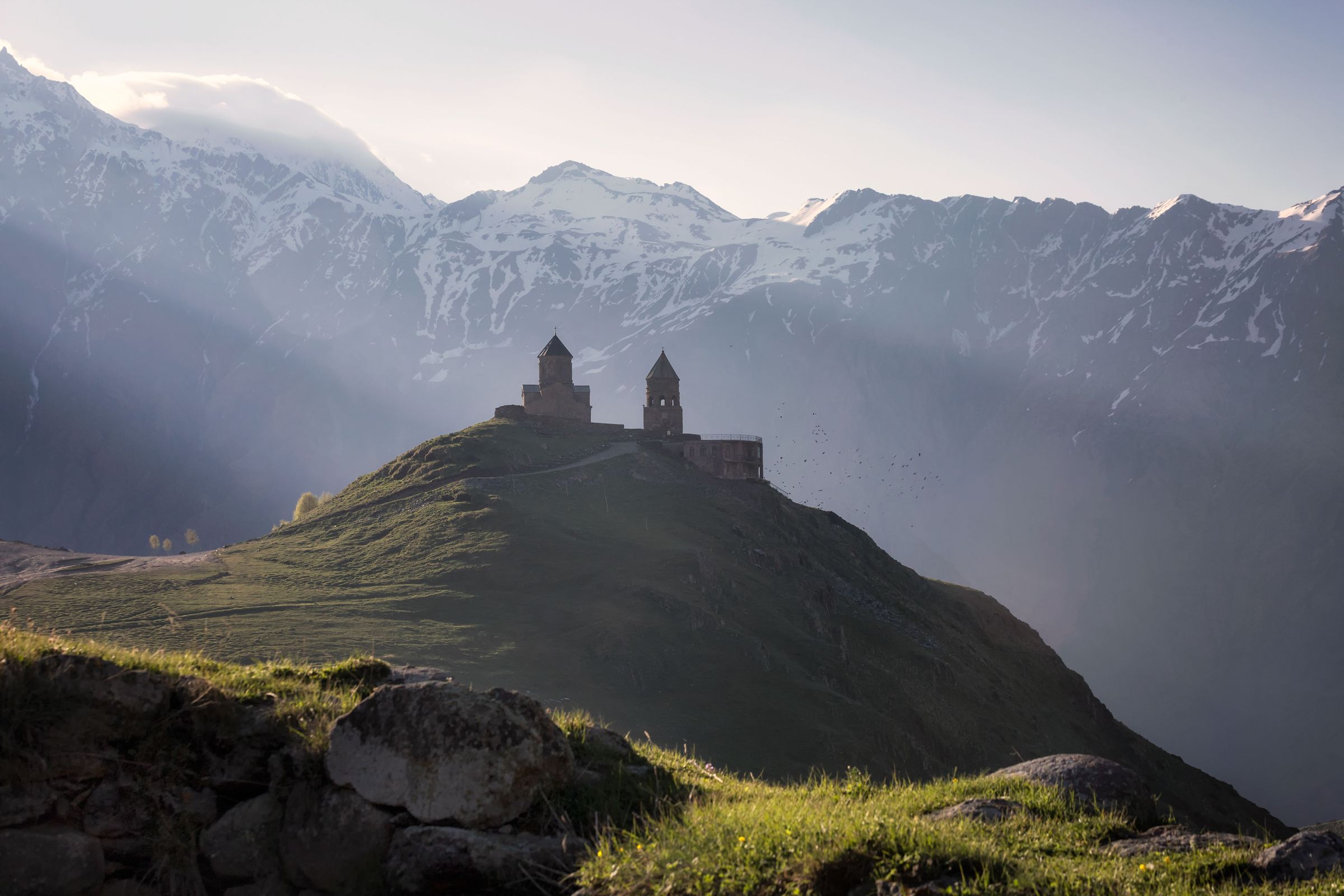
This is the region where 'safe' starts depending on preparation rather than luck. The drive north from Tbilisi along the Georgian Military Highway is genuinely spectacular and genuinely a mountain road: it climbs past Ananuri's fortress and over a pass that closes for snow without much warning between roughly November and April, and landslide-related closures happen even in the warmer months. Gergeti Trinity Church, the region's signature sight, sits at 2,170 metres beneath Mount Kazbek's 5,047-metre summit — walkable in 3-4 hours or reachable by 4WD, but a real climb, not a stroll, and afternoon weather up there turns fast. None of this makes the region risky for an ordinary visitor; it makes it a place where you check the pass status before setting out, dress for a mountain rather than a city day, and use a local driver rather than a rental car in shoulder season.
Svaneti (Mestia to Ushguli)
Best for remote mountain culture, with preparation
Svaneti's medieval defensive towers and high glacial valleys are one of the country's genuine wonders, and the region is entirely safe in the sense that matters most to visitors — the old blood-feud reputation attached to these towers is history, not present-day risk. The real considerations are logistical. The Zugdidi-Mestia road has been fully paved since 2010, making Mestia itself an easy, well-serviced base, but the onward track to Ushguli is a different matter: roughly 40km of rough 4WD track, 2.5-3 hours each way, and impassable from November through April. Guesthouses in Ushguli run basic but functional service year-round, fuller in summer. Go in June through September if hiking is the point, bring cash (card acceptance thins out fast past Mestia), and don't attempt the Ushguli track yourself in anything but a proper 4WD with a driver who knows the current conditions.
Tusheti
Best for experienced trekkers only, strict season
Tusheti is the honest exception on this list: stunning, and not a region to arrive at casually. The only road in crosses the Abano Pass at 2,850 metres, a 70km drive from Alvani that takes 3-4 hours of steep switchbacks, is typically open only late June through early October, and can be blocked by sudden snow even within that window. Mobile coverage is patchy to nonexistent through much of the region, medical help is far away, and the villages, including the main base at Omalo, run on a short, intense summer season rather than year-round tourism infrastructure. None of that is a reason to skip it if remote trekking is genuinely your trip — it's a reason to go with a guide or organised trek, confirm the pass is open before travelling, and treat it as expedition-style travel rather than a day trip with a rental car.
The administrative boundary lines (Abkhazia & South Ossetia)
Best avoided — the one clear no
This is the honest part of an honest guide. Abkhazia and the Tskhinvali region (South Ossetia) have been outside the Georgian government's control since the 2008 war and operate under a separate, contested administration. The Georgian government does not control entry, exit, or conditions there, consular protection is effectively unavailable if something goes wrong, and crossing the administrative boundary line other than through the one or two recognised checkpoints is a genuine legal and safety problem, not a technicality. This isn't a region on most travellers' plans in the first place — nothing on this list requires going near it — but it's worth being clear about precisely because the rest of the country is so relaxed: don't let that ease translate into assuming the boundary areas carry the same rules. If a trip genuinely requires that access, it needs specific, current official guidance, not general travel advice.