Why go
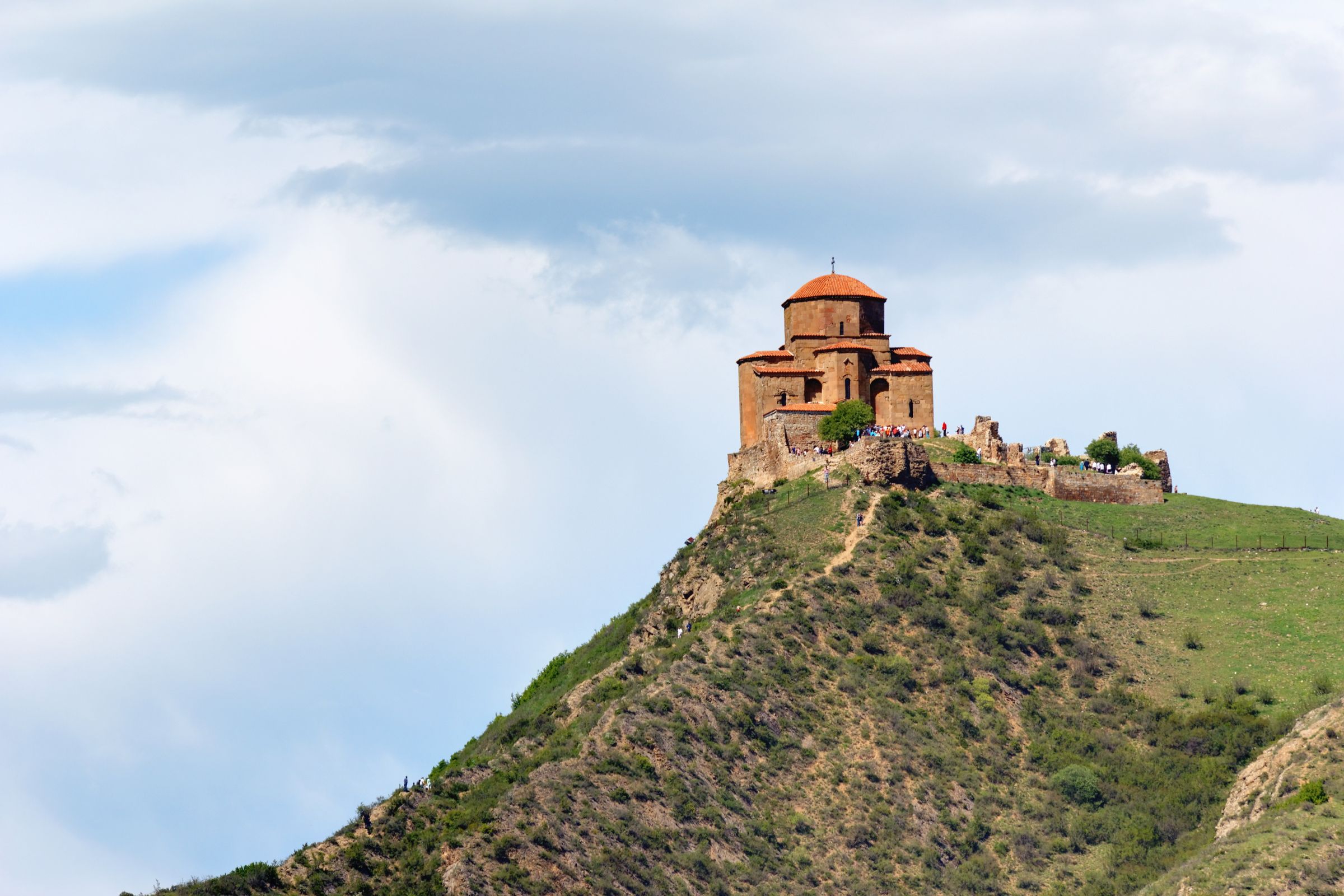
Jvari stands as Georgia's earliest surviving church, built in 585-604 AD under Stepanoz I, son of Guaram, presiding princes of Kartli. Its tetraconch design—a cross within a circle—became the architectural DNA of Georgian sacred buildings. The monastery commands the hill where Saint Nino raised her cross in the 4th century, converting King Mirian and establishing Christianity as Georgia's faith. From this limestone perch, the Mtkvari and Aragvi rivers run silver and blue below, their confluence visible like a living map. The interior preserves fragments of 6th-century stone carving and the original bema. No reconstruction, no romantic ruin: this is early medieval architecture surviving intact through fourteen centuries of invasions and earthquakes.