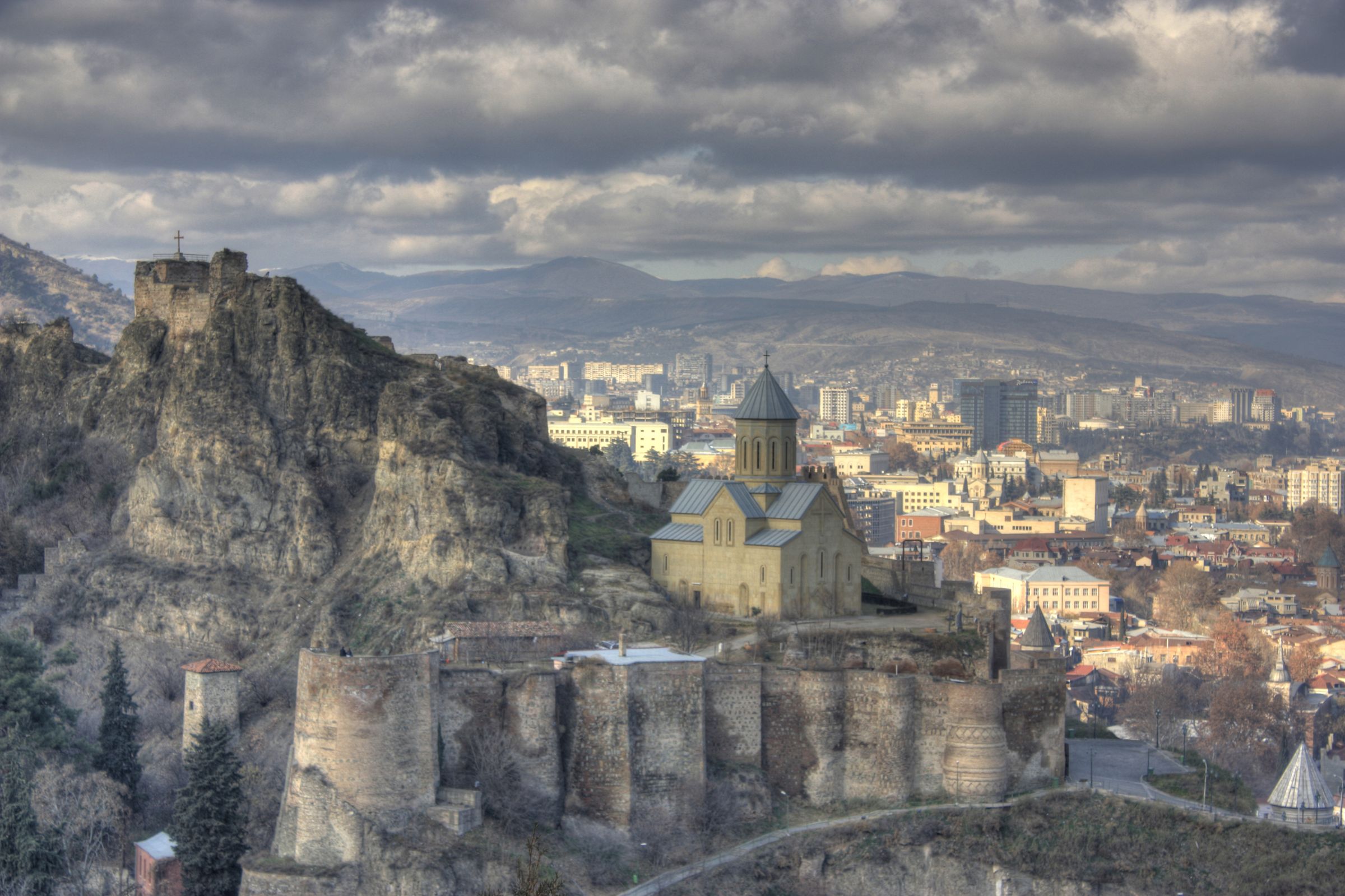
Narikala Fortress

Ancient guardian watching over Tbilisi's soul

Narikala Fortress

Narikala rises from the steep slope of Sololaki Ridge, its weathered stone walls holding nearly 1,700 years of Caucasian history. Founded as a Persian citadel in the 4th century, expanded by Arabs, Mongols, and Georgians, it became the backbone of Tbilisi's defense—its name itself likely derives from Persian 'narin qala,' meaning 'little fortress.' The 1827 explosion of Russian munitions stored here shattered much of the structure, yet what remains commands one of the most dramatic urban vistas in the region: the Mtkvari River bending through the valley, the tiled domes of Abanotubani's bath district, and the gleaming Holy Trinity Cathedral beyond. This is where Tbilisi reveals itself whole.

On the ground See

  • St. Nicholas Church, a 1996 reconstruction replacing the 13th-century church destroyed by Soviet authorities, its interior frescoed with vivid biblical scenes and Georgian monarchs
  • The western ramparts at sunset, when golden light spills across the river and the glass towers of modern Tbilisi catch fire against the mountains
  • The adjacent National Botanical Garden entrance, where a 19th-century waterfall and Persian-style terraces descend the same cliff face the fortress guards

Practical Know before you go

Accessible year-round via cable car from Rike Park (2.5 GEL) or a steep 20-minute walk from Meidan Square; evening visits offer cooler temperatures and illuminated city views.

Last reviewed 25 August 2026 · reviewed quarterly