Why go
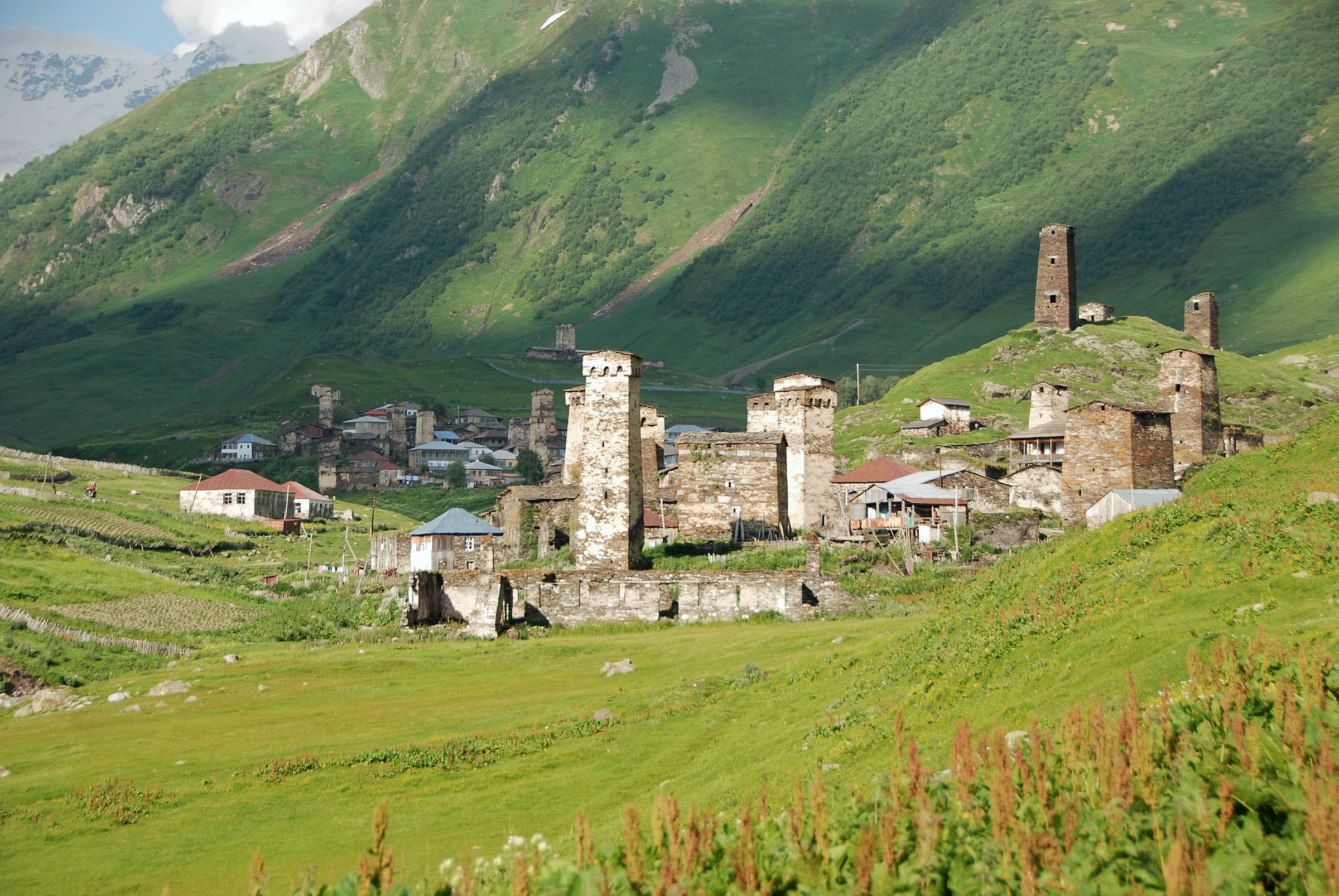
Mount Laila rises as a 4,008-metre whaleback of grass and stone above the Enguri Gorge, its rounded summit offering one of the most accessible high-altitude experiences in Svaneti without technical climbing. Unlike the jagged granite towers of neighbouring Ushba and Tetnuldi, Laila's broad shoulders were shaped by ancient glaciers into rolling alpine pastures still grazed by Svan families in summer. The ascent reveals the architectural drama of the range: from its slopes, the entire crest of the Greater Caucasus unfolds—Shkhara, Ushba, and the twin summits of Elbrus visible on clear days across the Russian border. The mountain carries the name of a Svanetian princess from oral tradition, though its older Georgian designation, Lahili, speaks to deeper roots. Trekkers come for the rare combination of substantial altitude gain and non-technical walking, traversing flower-filled meadows where Svan shepherds have summered their flocks for millennia.