Best Places to Visit in Georgia in Autumn

Best of Georgia · By season

Best Places to Visit in Georgia in Autumn

How to read this ranking

Ordered for how you travel, not for spectacle.

Each place below is scored for character, welcome, access across seasons, and the feeling it leaves — never for inventory. Use the traveller-type notes when two names pull equally.

The quick answer

Autumn is Georgia's harvest season, and the best places to be are Kakheti during rtveli (the grape harvest, mid-September to late October), the beech and oak forests of Borjomi-Kharagauli, and Racha's wine villages, all of which turn gold and crimson while crowds thin out. Mountain regions like Svaneti reward an early-autumn visit but close down fast once the first snow arrives in late October, so timing within the season matters as much as the region you pick.

Top picks

  • Best Overall: Kakheti — the grape harvest
  • Best for Scenery: Racha and the road to Ambrolauri
  • Best for Value: Borjomi-Kharagauli National Park
  1. Kakheti — Sighnaghi, Telavi and the wine villages

    Best for the grape harvest (rtveli)

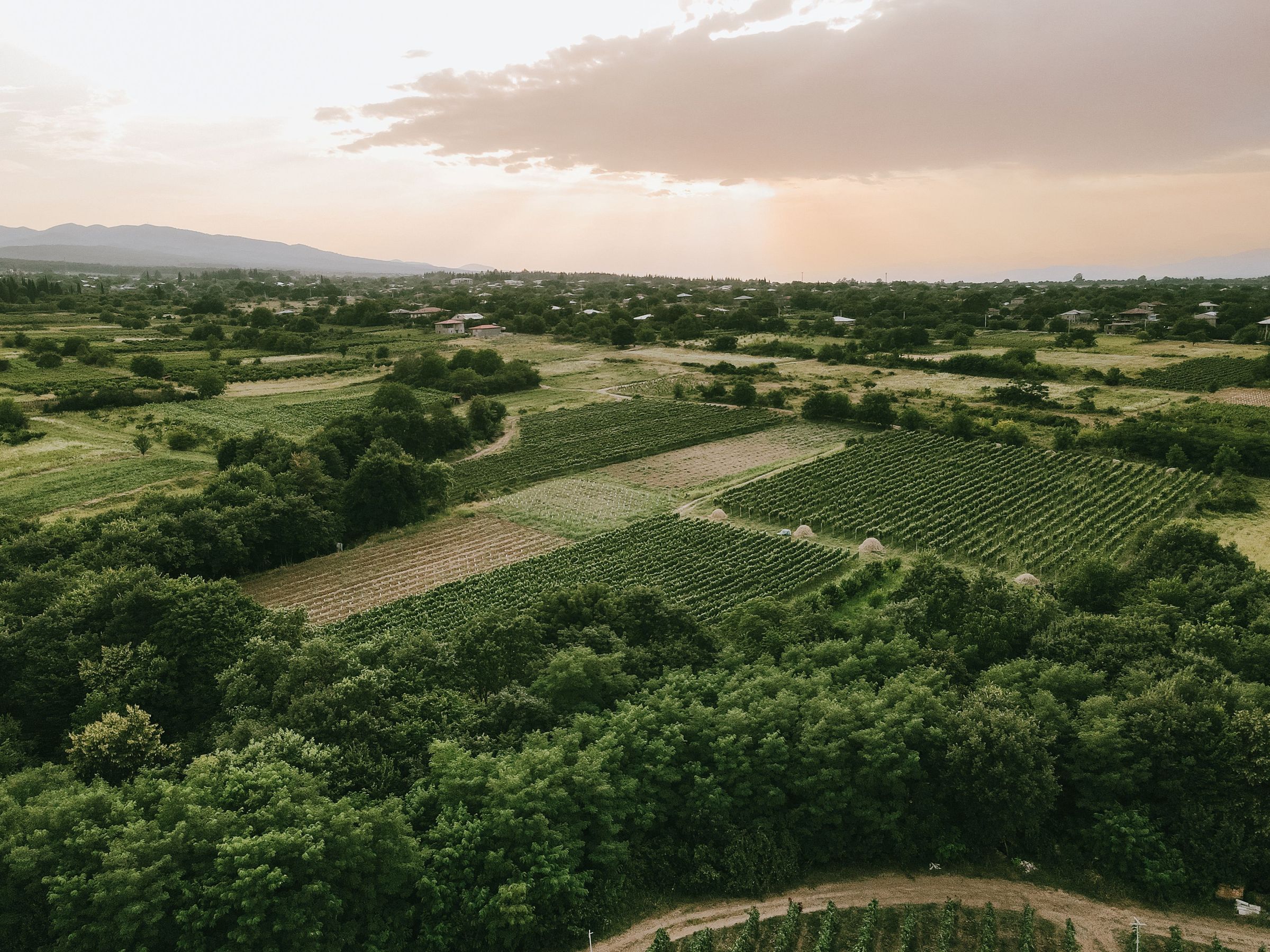
    Kakheti is Georgia's wine heartland, and autumn is the one season that shows why. Rtveli, the grape harvest, runs roughly mid-September to late October depending on the variety, and family cellars around Sighnaghi, Telavi and the Alazani Valley open their qvevri pits for pressing and fermentation that visitors can watch or, at many small wineries, join. Alaverdi Monastery, an 11th-century cathedral rebuilt over 6th-century foundations, keeps its own working wine cellar and sits at the centre of a valley that visibly comes alive during harvest weeks. Sighnaghi's intact 4-kilometre town wall gives the best vantage over the turning vineyards below, and Bodbe Monastery, two kilometres downhill, looks its best at sunset when the Alazani Valley goes amber. Tsinandali Estate, the 19th-century home of wine pioneer Alexander Chavchavadze, pairs its historic cellar with a botanical garden that carries its own autumn colour. This is Georgia at its most sociable season: long outdoor suppers, working cellars, and none of the summer heat.

    Kakheti

  2. Racha — Ambrolauri and Nikortsminda

    Best for wine country without the crowds

    Racha is the region Georgians keep for themselves: a mountain-wine district north of Kutaisi where the Aleksandrouli and Mujuretuli grapes that make Khvanchkara, Georgia's naturally semi-sweet red, ripen through September into a landscape of forested slopes turning copper and gold. Ambrolauri, the regional town, anchors visits to Nikortsminda Cathedral, a hexagonal 11th-century church whose exterior stone carving — grapevines, angels, and a 13th-century bell tower built under Queen Tamar — ranks among the finest in the Caucasus and is far quieter to visit than Kakheti's monasteries in the same season. Family cellars around the village of Khvanchkara pour tastings that pair naturally with the surrounding hillsides. There's no public transport network here, so this is a hire-a-driver-from-Kutaisi region rather than a self-navigate one, but that scarcity of infrastructure is exactly what keeps Racha's autumn uncrowded while Kakheti fills with harvest tourists.

    Racha

  3. Borjomi-Kharagauli National Park

    Best for forest hiking under turning leaves

    Georgia's largest national park, 85,000 hectares of Lesser Caucasus forest, is built almost entirely of the beech, oak and hornbeam that put on the country's most dramatic autumn colour change. Trails stay open through October, and the six-hour Likani-to-Lomismta circuit through old-growth forest is at its best once the canopy turns, with a real chance of spotting Caucasian red deer at dawn in the Kvabiskhevi Gorge before the cold sends them lower. Borjomi town itself, source of Georgia's famous mineral water since the 1890s, softens the hike with the Ekaterina Spring pavilion in Central Park and the Ferdinand trail to Romanov-era viewpoints over the gorge — both easy half-day additions if the full circuit is too much. Free trail permits come from the Borjomi or Kharagauli visitor centres, and some routes require a ranger. It's an easy train ride from Tbilisi, which makes this one of the most accessible forest-and-foliage combinations in the country.

    Borjomi, Vardzia & Bakuriani

  4. Martvili and Okatse Canyons

    Best for canyon adventures before the season closes

    Imereti and Samegrelo's karst canyons are a May-to-October window, and autumn is the calmer end of it. Martvili Canyon, a 700-metre limestone gorge cut by the Abasha River, is best known for its short boat ride through a stretch where the walls close to a few metres apart, with a walking trail continuing to the 30-metre Dadiani Waterfall and the 7th-century monastery watching over the gorge from above. Half an hour away, Okatse Canyon takes the opposite approach: a 780-metre steel walkway bolted to the cliff face, cantilevered 140 metres over the gorge floor with a glass-floored viewing point at its far end, built in 2014 over Soviet-era hydroelectric infrastructure that once made the valley inaccessible. Both close in high wind or ice, which becomes more likely as November approaches, so aim for September or October rather than the tail of the season. Both sit within an easy day trip of Kutaisi and pair naturally with each other.

    Imereti & Samegrelo

  5. Svaneti — Mestia and the Enguri Valley

    Best for dramatic peaks in early autumn light

    Svaneti's medieval stone towers look their sharpest against a September sky, before autumn snow starts closing the higher ground. Mestia, the region's base at 1,500 metres, keeps its Hatsvali cable car running toward Mount Ushba views and the Koruldi Lakes trail into early autumn, and the town's ethnography museum is worth an afternoon on a weather day. Push further to Ushguli, the UNESCO-listed cluster of four Svan hamlets beneath Shkhara's glacier, only while the 40-kilometre 4WD track from Mestia stays open — it becomes impassable from roughly November through April, and guesthouse services thin out fast once the June-to-September season ends. That trade-off is the honest reason Svaneti ranks here rather than higher: it rewards an early-autumn trip (September, first half of October) but punishes anyone who leaves it too late, when roads close and towers disappear into cloud with no view to show for the trip. Go early in the season, not at the end of it.

    Svaneti

  6. Vardzia Cave Monastery

    Best for history without the summer heat

    Vardzia is a cliff carved into a city: roughly six thousand cave dwellings cut into the Erusheti Mountains under King Giorgi III and expanded by his daughter, Queen Tamar, in the 1180s as her summer residence. The site is a serious walk across bare rock with almost no shade, which makes high summer genuinely uncomfortable; autumn's milder temperatures make the climb through the complex, past the Church of the Dormition's fresco cycle — including a rare royal portrait of Tamar alongside her father — considerably more enjoyable. The secret tunnel network that once ran down to the Mtkvari River and the surviving monk-tended vineyard terraces are easier to appreciate at a slower pace than the summer sun usually allows. Reaching Vardzia means driving from Akhaltsikhe via the fortress town of Khertvisi, or taking an infrequent marshrutka to Aspindza and a taxi from there — routes that stay reliable through October before mountain-pass weather becomes a factor.

    Borjomi, Vardzia & Bakuriani

  7. Tbilisi — Old Town, Mtatsminda and the Botanical Garden

    Best for a golden-hued city break

    Tbilisi doesn't need a harvest or a mountain pass to earn its place on an autumn list — it simply becomes the most comfortable version of itself once the summer heat breaks. The Botanical Garden, 128 hectares in the Tsavkisis-Tskali gorge, plants its maples specifically for the kind of colour display that only shows in autumn, alongside a 400-year-old Caucasian elm that predates the garden itself. Above the Old Town, Mtatsminda Park is best worked from top to bottom: ride the original 1905 funicular up, visit the Pantheon where Ilia Chavchavadze and other Georgian cultural figures are buried among cypress trees, then descend through the lower terraces at sunset as the Ferris wheel turns against a gold-to-violet sky. Down in the Old Town itself, the sulphur bathhouses of Abanotubani and the walk up to Narikala Fortress are simply more pleasant to do without July's heat radiating off the stone. It's the easiest base to pair with any other entry on this list.

    Tbilisi & Mtskheta

  8. Lagodekhi Nature Reserve

    Best for hikers chasing peak foliage

    Founded in 1912, Lagodekhi is Georgia's oldest protected area, a 24,000-hectare reserve on the Kakheti-Dagestan border where brown bears and over 150 recorded bird species still live in forest that has gone largely unlogged for a century. Hiking season here officially runs June through September, but the reserve itself notes that its autumn colours actually peak in October — a genuine exception where the calendar shoulder-season and the best scenery overlap on purpose rather than by compromise. The Ninoskhevi Waterfall trail, a manageable 4-kilometre walk through yew and boxwood groves to a 40-metre cascade, is achievable in a morning; the serious option is the 19-kilometre round trip to Black Rock Lake, a 2,780-metre alpine plateau near the Russian border, which needs a full day and settled weather. Permits are required year-round from the Lagodekhi Protected Areas office. Base in Telavi, the closest town with a real range of places to stay, and treat this as a one- or two-night detour from the Kakheti wine circuit rather than a separate trip.

    Kakheti

Best for every traveller

  • Wine lovers: Kakheti during rtveli — Working qvevri cellars, family harvest suppers, and monasteries like Alaverdi that tie wine directly to a thousand years of Georgian religious life — nowhere else compresses all three into one short valley.
  • Hikers: Borjomi-Kharagauli National Park — The trail network stays open and well-marked through October, the forest colour change is the reward rather than an incidental backdrop, and permits are free.
  • Photographers: Racha or early-season Svaneti — Racha pairs turning forest with almost no other visitors; Svaneti's towers against a September sky are unmatched, but only if you go before the roads start closing.
  • Families with children: Tbilisi and Kakheti — Both are short drives from the capital with real infrastructure — funiculars, museums, easy wineries — rather than long 4WD tracks or unserviced mountain villages.
  • Slow, off-the-beaten-path travellers: Racha and Lagodekhi — Both require a driver rather than public transport, which is precisely what keeps them empty while Kakheti and Svaneti fill up with the same-season crowd.

How to choose

Start from the calendar, not the map: rtveli in Kakheti runs mid-September into late October depending on the grape, Borjomi's forest and Lagodekhi's canopy peak in October, and Svaneti's mountain access starts narrowing from mid-October and can close by early November. If the trip is built around one signature experience — the harvest, the forest colour, the high peaks — put that region first and build the rest of the itinerary around its access window rather than the reverse. Travellers without a rental car or driver should weight Tbilisi, Kakheti and Borjomi more heavily, since all three run on trains and marshrutkas; Racha, Svaneti and Lagodekhi's deeper trails effectively require arranging transport in advance.

Methodology — how we ranked

We shortlisted places against seven criteria specific to Georgian autumn travel: whether something meaningful actually happens there in September–November (a harvest, a colour change, a closing weather window) rather than the place simply being tolerable in cooler weather; access, since several of Georgia's best regions close or become unreliable once the first snow falls; scenery that autumn genuinely improves rather than merely permits; cultural weight, favouring sites tied to Georgia's wine, monastic, or highland traditions over generic viewpoints; value, since autumn rates and crowd levels are usually better than summer; sustainability, weighting places that can absorb shoulder-season visitors without strain; and honesty about limits — a few famous summer destinations (high Tusheti, the Ushguli high pastures) are noted for what autumn takes away, not glossed over.

Know before you go

Practical notes, without the noise

Autumn in Georgia runs roughly September through November, with September and early October the most reliable window across the whole country and late October into November increasingly weather-dependent in the mountains. Lowland regions — Tbilisi, Kakheti, Imereti's canyons — stay mild and accessible through November; highland regions — Svaneti, Tusheti, the Ushguli approach — should be visited in September or the first half of October, since the 4WD tracks into places like Ushguli become unreliable and then impassable once the first serious snow falls, typically by early-to-mid November. Trails in Borjomi-Kharagauli, Lagodekhi and the Kutaisi canyons generally stay open through October. Rates and availability are noticeably better than the July-August peak, and Kakheti's harvest weekends are the one exception where advance booking matters, since family wineries and small guesthouses fill up around rtveli. A rental car or hired driver opens up Racha and the Svaneti approach considerably; Tbilisi, Kakheti's main towns and Borjomi are all reachable by train or marshrutka.

What is rtveli and when does it happen?

Rtveli is the Georgian grape harvest, centred on Kakheti, running roughly from mid-September to late October depending on the grape variety. Many family wineries invite visitors to watch or take part in the pressing, and the harvest weekends are the busiest and most atmospheric time to visit the region.

Is Svaneti still worth visiting in autumn?

Yes, but timing matters more than in any other region on this list. Early autumn — September and the first half of October — gives clear mountain light with fewer visitors than summer. By late October the 4WD track to Ushguli starts becoming unreliable, and it is typically impassable from November through April, so a late-autumn trip risks arriving to closed roads or cloud with no view.

What about Tusheti in autumn?

Tusheti's single mountain road closes for the season once the first heavy snow falls, usually by early-to-mid October, and the region is effectively cut off until late spring. It is not included in this list because by the time most autumn trips are planned, access is already closing or closed — treat it as a summer-only destination instead.

Do I need a car to see these places?

Not for all of them. Tbilisi, Kakheti's main towns and Borjomi are reachable by train or marshrutka. Racha, the Svaneti approach and Lagodekhi's deeper trails are far easier with a rental car or hired driver, since public transport is infrequent or nonexistent on those routes.

Is autumn cheaper than summer in Georgia?

Generally yes — accommodation rates and crowd levels both drop once July and August end, with the notable exception of Kakheti's harvest weekends, when family wineries and guesthouses around Sighnaghi and Telavi can fill up and are worth booking ahead.

We re-check: exact rtveli (harvest) start and end dates, which shift year to year with grape ripening; the date Svaneti's Mestia-Ushguli road becomes impassable; the date Tusheti's mountain road closes for winter; national park trail opening/closing dates and permit requirements; guesthouse and winery seasonal opening hours and rates.
Last reviewed 25 August 2026 · biannual

Every booking removes 1 tonne of CO₂ — no surcharge.