Best Places to Visit in Georgia in Summer

Best of Georgia · By season

Best Places to Visit in Georgia in Summer

How to read this ranking

Ordered for how you travel, not for spectacle.

Each place below is scored for character, welcome, access across seasons, and the feeling it leaves — never for inventory. Use the traveller-type notes when two names pull equally.

The quick answer

Summer is when Georgia's high country opens up: the 4WD tracks into Svaneti and Tusheti clear of snow, the Abano Pass unlocks Tusheti's koshki towers for its short season, and the Black Sea coast at Batumi hits its warmest, liveliest stretch. Pair a mountain base with a few cooler-air or water days — Borjomi's forests, Kakheti's vineyard evenings, or the Martvili and Okatse canyons — rather than trying to do all of Georgia's climates in one loop.

Top picks

  • Best Overall: Svaneti (Mestia & Ushguli)
  • Best for Beach Time: Batumi & the Black Sea Coast
  • Best for a Short Window: Tusheti (Omalo)
  1. Svaneti (Mestia & Ushguli)

    Best for mountain scenery and tower-house villages

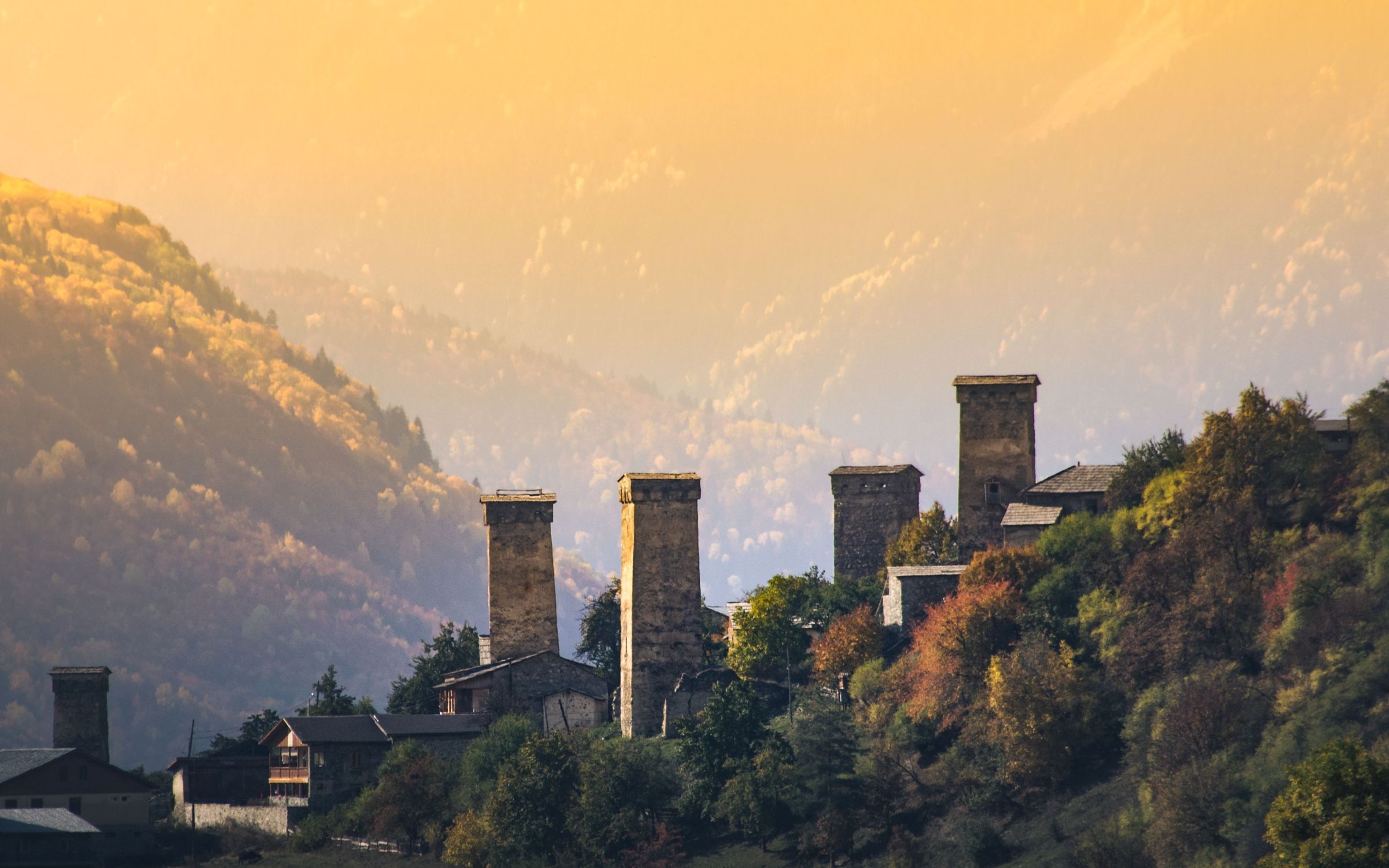
    Svaneti is the reason most summer itineraries exist. Mestia, at 1,500 metres in the Enguri valley, is the region's gateway and the densest concentration of medieval Svan defensive towers still standing and lived in — UNESCO recognised the whole tradition, not just one site. From here the road climbs 40 rough kilometres by 4WD (2.5–3 hours) to Ushguli, four hamlets strung beneath Shkhara's 5,193-metre glacier and one of Europe's highest permanent settlements, where cattle still move through muddy lanes past 9th-to-12th-century stone towers. Both places function year-round on paper, but the guesthouses, hiking trails and the Mestia–Ushguli track itself run at full capacity only June through September; the road can close outright in winter. Hikers use Mestia as a base for multi-day treks toward Ushguli or the Shkhara glacier front, while a shorter visit still delivers the towers, the valley light, and dinner in a stone tower-house guesthouse.

    Svaneti

  2. Batumi & the Black Sea Coast

    Best for beach time and seaside city life

    Batumi is Georgia's answer to a beach holiday, and summer is unambiguously its season — the guidance on the ground is May through October, with July and August the warmest stretch for swimming. The 7-kilometre seaside boulevard is the centrepiece: palm-lined, sculpture-dotted, busiest at sunset when Georgian families come out to walk it. The city pairs the pebble coastline with a compact skyline of reinvention — the 130-metre Alphabetic Tower spelling out Georgia's unique script, the moving Ali and Nino statues, a working Ferris wheel and piazza — so a beach day sits easily alongside an evening of city sightseeing. It's reachable directly by flight from Istanbul and several European cities, or by a scenic five-hour train from Tbilisi, which makes it easy to bolt onto a mountain-and-coast itinerary rather than a stand-alone trip.

    Adjara

  3. Tusheti (Omalo)

    Best for a short, genuinely remote window

    Tusheti is the most literal case of summer-only in this list: the only road in, over the 2,850-metre Abano Pass, is typically open late June to early October and can close without warning even inside that window. Omalo, at 1,880 metres, is the region's one year-round inhabited village and the traditional seat of a highland province that shares its cylindrical koshki towers only with neighbouring Khevsureti. The 70-kilometre drive from Alvani takes 3–4 hours of steep switchbacks by 4WD — there's no other way in — and rewards the trip with a plateau that feels genuinely cut off from the rest of Georgia, used by shepherds moving flocks between highland pastures. This is not a place to add as a day trip: build in an overnight in a village guesthouse, travel with a driver who knows the pass, and treat the short season itself as part of what makes it worth seeing.

    Tusheti

  4. Kazbegi & the Military Road

    Best for iconic day-hikes and high-mountain views

    The drive up the Georgian Military Road to Stepantsminda (Kazbegi) is one of the country's set-piece journeys, and Gergeti Trinity Church is its payoff: a 14th-century stone church standing alone at 2,170 metres, with the glacier of 5,047-metre Mount Kazbek rising directly behind it. The site is explicitly a June–September destination — reachable by 4WD track or a 3–4 hour hike — and July–August draws crowds, so an early-morning arrival earns the empty-churchyard version of the view. Beyond the church, Kazbegi National Park has trails toward the Gergeti Glacier itself, and Gudauri's ski infrastructure a short drive south doubles as a paragliding and hiking base once the snow clears. It's an easy add to a Tbilisi-based itinerary — under three hours each way — which makes it one of the most efficient mountain days in the country.

    Mtskheta-Mtianeti

  5. Kakheti Wine Country (Sighnaghi & the Alazani Valley)

    Best for vineyard evenings and wine culture

    Kakheti doesn't need summer the way the high mountains do, but long warm evenings are when its wine culture is at its most pleasant — supra dinners on open terraces, vineyard rows lit low and gold, and cellar doors open late. Sighnaghi is the natural base: an 18th-century walled hill town built by King Erekle II against Persian and Dagestani raids, its full circuit of ramparts still walkable, overlooking the Alazani Valley's vineyards. The town's cobbled streets and carved-balcony houses feel suspended between eras, and it's an easy 1.5–2 hours from Tbilisi. From here it's a short run to Alaverdi Monastery and the qvevri wine cellars that make the region the country's viticultural heart — this is a slower-paced counterpoint to the mountain legs of a summer trip, best spent over a full day rather than rushed as a stopover.

    Kakheti

  6. Borjomi & Bakuriani Highlands

    Best for escaping the summer heat

    When Tbilisi and the lowlands turn heavy with heat, Borjomi-Kharagauli National Park is where Georgians have gone for over a century — 85,000 hectares of Lesser Caucasus forest, once favoured by Russian aristocracy for the mineral springs and now for its 12 marked trails through temperate rainforest of Colchic boxwood, yew and fir. Trails run May through October, with free permits from the Borjomi or Kharagauli visitor centres and some routes requiring a ranger. Bakuriani, a short hop up the Trialeti Range at 1,700 metres, adds cooler-still alpine air and an alpine botanical garden, though its ski infrastructure sits mostly dormant in summer. The pairing works as a two-to-three-day cool-air interlude between hotter stretches of a Georgian itinerary — walkable forest by day, mineral-water spa towns by evening.

    Samtskhe-Javakheti

  7. Martvili & Okatse Canyons

    Best for canyon boat rides and cliffside walkways

    Both of these karst canyons run on strictly summer schedules and sit within easy reach of Kutaisi. Martvili Canyon, a 700-metre limestone gorge carved by the Abasha River, is navigable by small boat through milky turquoise pools only when water levels permit — May through October — a stretch of water once used for baptismal rites by the monks of the adjoining 7th-century monastery. Twenty minutes further on, Okatse Canyon offers a different sensation entirely: a 780-metre steel walkway bolted to the cliff face, cantilevering 140 metres above the Okatse River, built in 2014 over what had been Soviet-era hydroelectric infrastructure. Both close during high winds or ice and are best done as a single day out of Kutaisi, which also puts Prometheus Cave's stable 14°C interior within reach for a break from the heat.

    Samegrelo & Imereti

  8. Racha & Shaori Lake

    Best for quiet, off-the-beaten-path scenery

    Racha sees a fraction of the traffic Svaneti or Kazbegi do, which is exactly its appeal for travellers who've already ticked off the headline mountains. Shaori Lake, a reservoir formed in 1957 when the Shaori River was dammed for hydroelectric power, is at its stillest and most visitable June through September — forested Caucasus foothills run straight into water calm enough to invert the sky, with the flooded valley's lost villages a matter of local memory rather than anything visible. Public minibuses reach Ambrolauri from Kutaisi in about 2.5 hours, with a taxi covering the last 30 minutes to the lake, though private transport gives far more flexibility for exploring the wider Racha countryside. This is a slow-travel add for a longer trip rather than a first-time-visitor priority — come here after Svaneti and Kazbegi, not instead of them.

    Racha-Lechkhumi

Best for every traveller

  • First-time visitors with limited days: Kazbegi & the Military Road, plus Sighnaghi — Both are comfortable day trips from Tbilisi, so you get a genuine mountain view and a wine-country town without committing to a multi-day 4WD route.
  • Serious hikers: Svaneti (Mestia & Ushguli) — The trail network and multi-day trekking infrastructure between Mestia and Ushguli are the most developed in the country, with the reward of glacier views the whole way.
  • Travellers who want somewhere genuinely remote: Tusheti (Omalo) — The Abano Pass's short opening window and the difficulty of the drive keep visitor numbers low in a way no other accessible region in Georgia matches.
  • Beach and city travellers: Batumi & the Black Sea Coast — It's the only place on this list built around swimming and a seaside evening promenade, with a proper city's worth of restaurants and museums attached.
  • Families and travellers avoiding rough roads: Borjomi & Bakuriani, plus Martvili & Okatse Canyons — Both are reachable on paved roads without a 4WD, offer shaded forest trails or a boat ride rather than strenuous hiking, and sit close to towns with full services.

How to choose

Start from how much driving on rough mountain roads you actually want to do. Svaneti and Tusheti both require 4WD tracks and deliver the most dramatic scenery, but they cost the most travel time and are only fully open in this exact season. Kazbegi gives a similar high-mountain payoff for a fraction of the effort, reachable in under three hours from Tbilisi on a paved road. If the trip is as much about food, wine and slower afternoons as landscape, weight it toward Kakheti and Borjomi, both easy add-ons rather than dedicated expeditions. Batumi answers a different question entirely — it's the one place here built around the coast rather than the mountains, and works well bookended at the start or end of a loop rather than squeezed into the middle.

Methodology — how we ranked

This list is built from on-the-ground detail for 568 named places across Georgia, filtered to what actually changes for the better between June and September: roads and mountain passes that are only physically open in summer, boat and cable-car operations that run on a summer schedule, canyon walkways that close outside the season, and coastal towns that come alive only once the sea warms. We weighed genuine seasonal advantage (not just tolerable weather), access difficulty and realistic travel time from a bookable base, scenery and cultural weight, and value against how crowded each place gets in peak July–August. Anywhere that's just as good — or better — in spring or autumn was left off in favour of places where summer is the actual reason to go.

Know before you go

Practical notes, without the noise

June through September is the working window for this entire list: it's when the Abano Pass into Tusheti and the Mestia–Ushguli track are both reliably passable, when Martvili and Okatse's canyon operations run, and when Batumi's sea is warm enough to swim in. July and August bring the heaviest crowds and the strongest heat in Tbilisi and the lowlands, which is part of why Borjomi and Bakuriani earn a place as a cooling counterpoint. A realistic loop pairs one high-mountain base (Svaneti or Kazbegi, rarely both unless the trip runs two weeks or more) with Kakheti or Borjomi for lower-effort days, and treats the coast and Tusheti as deliberate bookends rather than something to fit in en route. Marshrutka minibuses connect most of these towns from Tbilisi or Kutaisi, but a hired driver or self-drive 4WD is the realistic option for Ushguli, Omalo and the more remote Racha roads.

What is the best month to visit Georgia in summer?

June and September give the mountain regions their full access window with fewer crowds than the July–August peak; July and August are warmest for the Batumi coast but also the busiest and hottest in Tbilisi and the lowlands.

Do I need a 4x4 to reach Svaneti and Tusheti?

For Ushguli and for the Abano Pass into Tusheti, yes — both routes are rough, unpaved mountain tracks that regular cars aren't built for. Mestia itself is reachable by paved road and regular marshrutka.

Is Tusheti only accessible in summer?

Effectively yes. The Abano Pass typically opens late June and closes by early October, and can shut temporarily even within that window if snow moves in, so it's worth checking current conditions before committing to a fixed date.

Is Batumi worth visiting if I'm not going for the beach?

Yes — the seaside boulevard, Alphabetic Tower, old town architecture and botanical garden give it enough to fill a day or two even for travellers who won't swim, though the coast is the main draw for most visitors.

How many of these places can I realistically fit into one trip?

A ten-to-fourteen-day trip can comfortably combine one high-mountain region (Svaneti or Kazbegi), Kakheti, and either Batumi or the Martvili/Okatse canyons. Fitting in Tusheti as well usually means picking a shorter list elsewhere, given the driving time each remote region demands.

We re-check: Abano Pass and Mestia–Ushguli road opening/closing dates; guesthouse and hotel names and availability; prices; Martvili and Okatse canyon boat and walkway operating dates; flight and train schedules to Batumi.
Last reviewed 25 August 2026 · quarterly

Every booking removes 1 tonne of CO₂ — no surcharge.