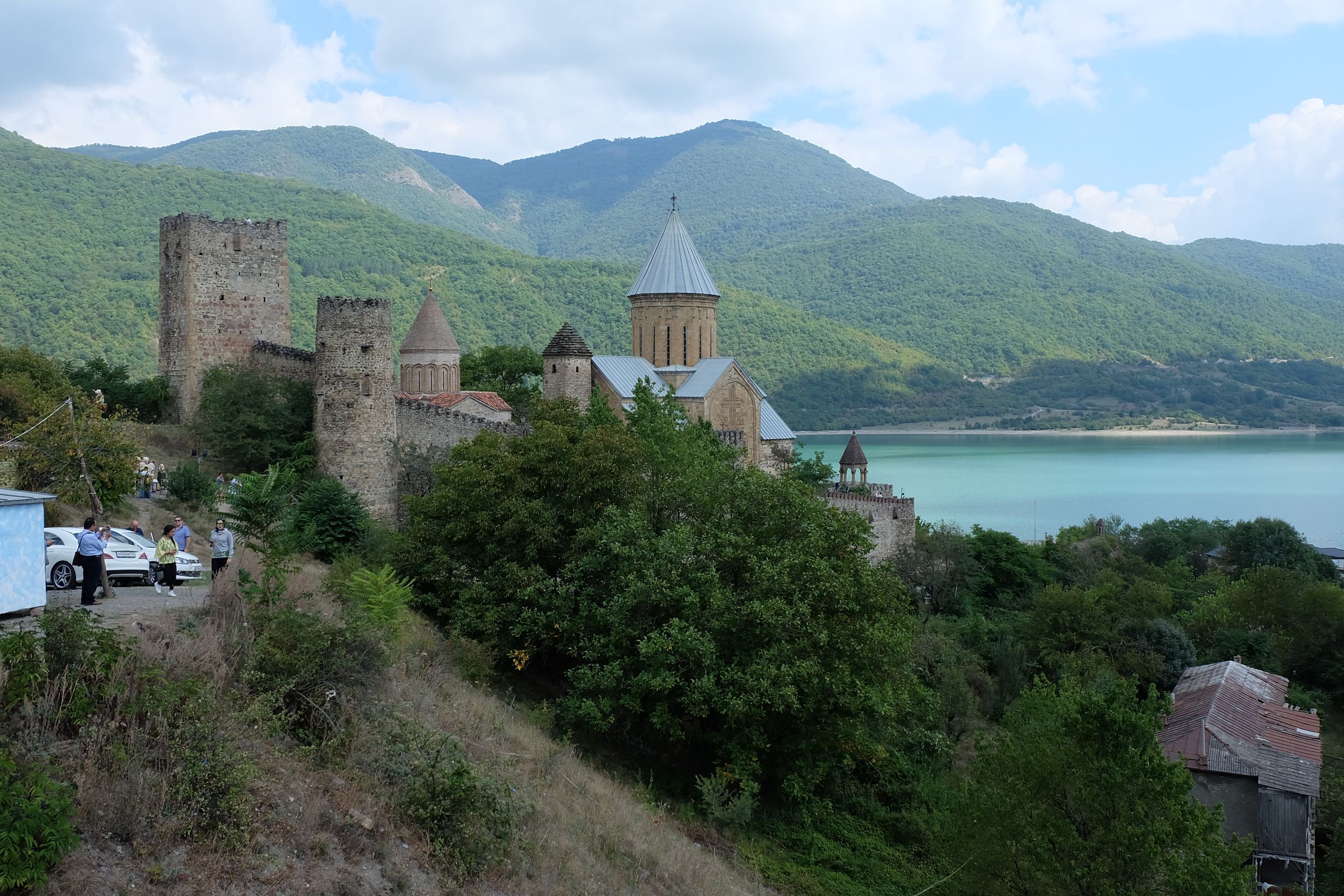
Ananuri Fortress

Where rivers merge and stone defiance endures

Ananuri Fortress

Ananuri rises from a forested promontory where the Aragvi and its tributary meet, a 17th-century fortress complex that once guarded the road to the high Caucasus. The Dukes of Aragvi built and rebuilt these walls across centuries of feudal warfare and Persian incursions; their Church of the Assumption, finished in 1689, shelters extraordinary relief carvings of vine-scrolls, beasts, and a striking Last Judgment. The complex became a symbol of Georgia itself when it graced the cover of Soviet guidebooks and, later, Lonely Planet. Come for the architecture—twin churches, a slender bell tower, crenellated walls—but stay for the hush of the gorge, the water's roar below, and the understanding that this was both sanctuary and weapon, faith and fear made stone.

On the ground See

  • The Church of the Assumption's exterior frieze, carved by local master Tazari Jughayisdze, depicting the damned in chains and the saved ascending—a rare surviving example of 17th-century Georgian narrative sculpture
  • The upper fortress walls and keep, climbed via worn stone steps for views over the turquoise confluence of the Aragvi rivers and the Georgian Military Highway winding north toward Kazbegi
  • The smaller Church of the Deity, with its original 17th-century fresco fragments and the gravestones of the Aragvi dukes, whose violent history includes fratricide and massacre by the rival duke Shanshe of Ksani in 1739

Practical Know before you go

Accessible year-round by car or marshrutka from Tbilisi (approximately 70 km, 1.5 hours) along the Georgian Military Highway; spring and autumn offer clearest river colors and fewer tourists than summer.

Last reviewed 25 August 2026 · reviewed quarterly