Why go
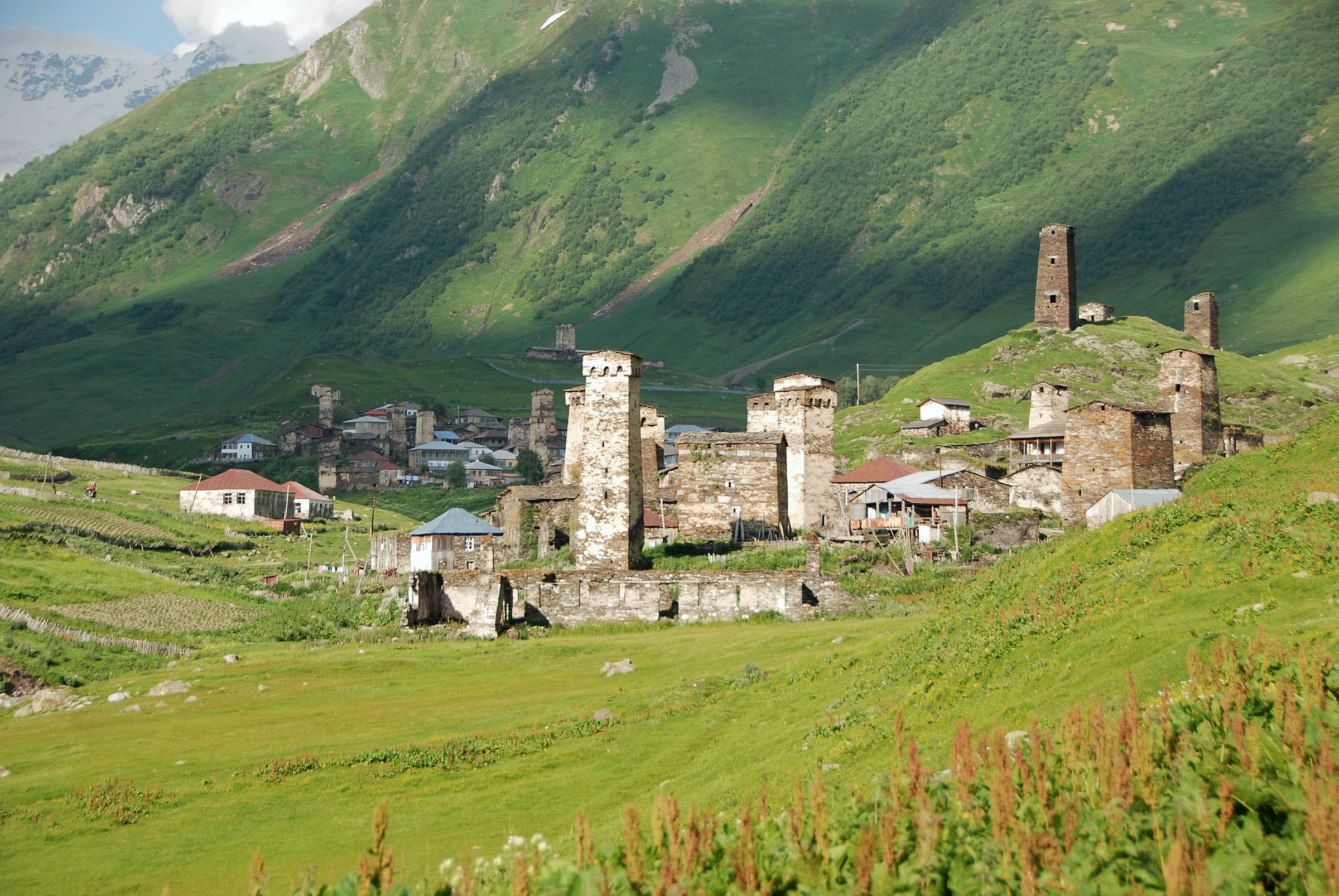
Ushguli is a living medieval fortress: four hamlets strung along the Enguri River beneath Shkhara's 5,193m glacier, their Svan defensive towers—built between the 9th and 12th centuries—still inhabited. UNESCO recognized this as a masterpiece of mountain adaptation: families lived in these stone sentinels during blood feuds and Mongol raids. At 2,100-2,200m, it is often cited alongside Juf, Switzerland as one of Europe's highest permanently inhabited settlements, but here shepherds still drive cattle through muddy lanes, and grandmothers bake kubdari in outdoor ovens. The isolation preserved something rarer than architecture: a Svan language older than Georgian, oral epic poetry, and pre-Christian rituals beneath Christian crosses. You come for the towers, stay for the unbroken continuity.