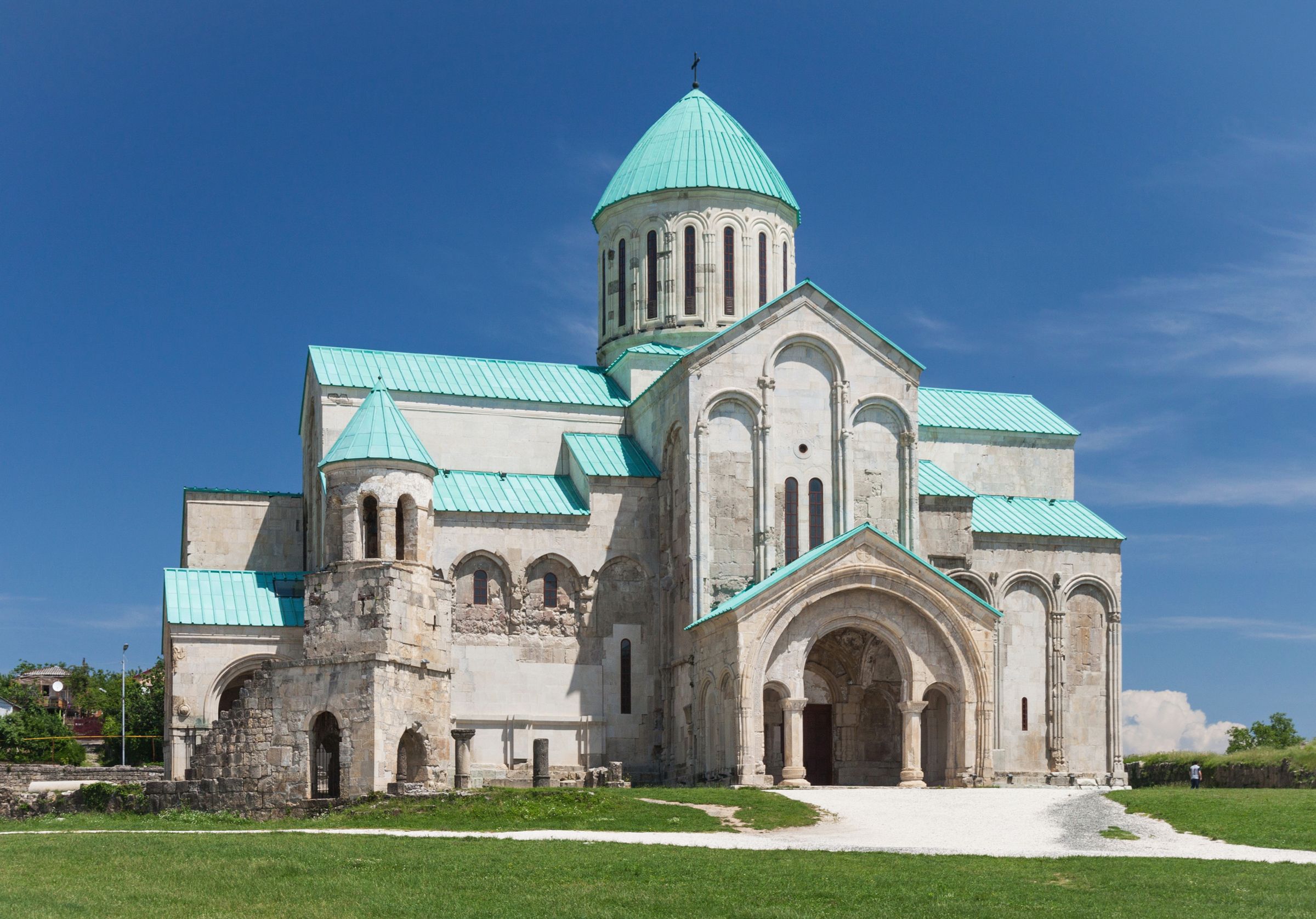
Why go
Founded in 1106 by King David the Builder, Gelati Monastery was deliberately established as a center of learning to rival Constantinople, serving as Georgia's premier medieval academy where theology, philosophy, medicine, astronomy, and manuscript illumination were taught. The monastery functioned as a royal burial ground and remained Georgia's intellectual heart for centuries. Its significance transcends architecture: UNESCO recognizes Gelati as a masterpiece of the Golden Age of medieval Georgia, embodying the fusion of Byzantine ecclesiastical tradition with distinctive local artistry. The exceptional 12th-century mosaic of the Virgin and Child in the apse—executed with extraordinary technical precision and emotional depth—represents one of the finest surviving examples of Byzantine mosaic art outside Constantinople itself, making this isolated hillside complex an essential pilgrimage for anyone seeking to understand how a small kingdom cultivated world-class scholarship and sacred art.