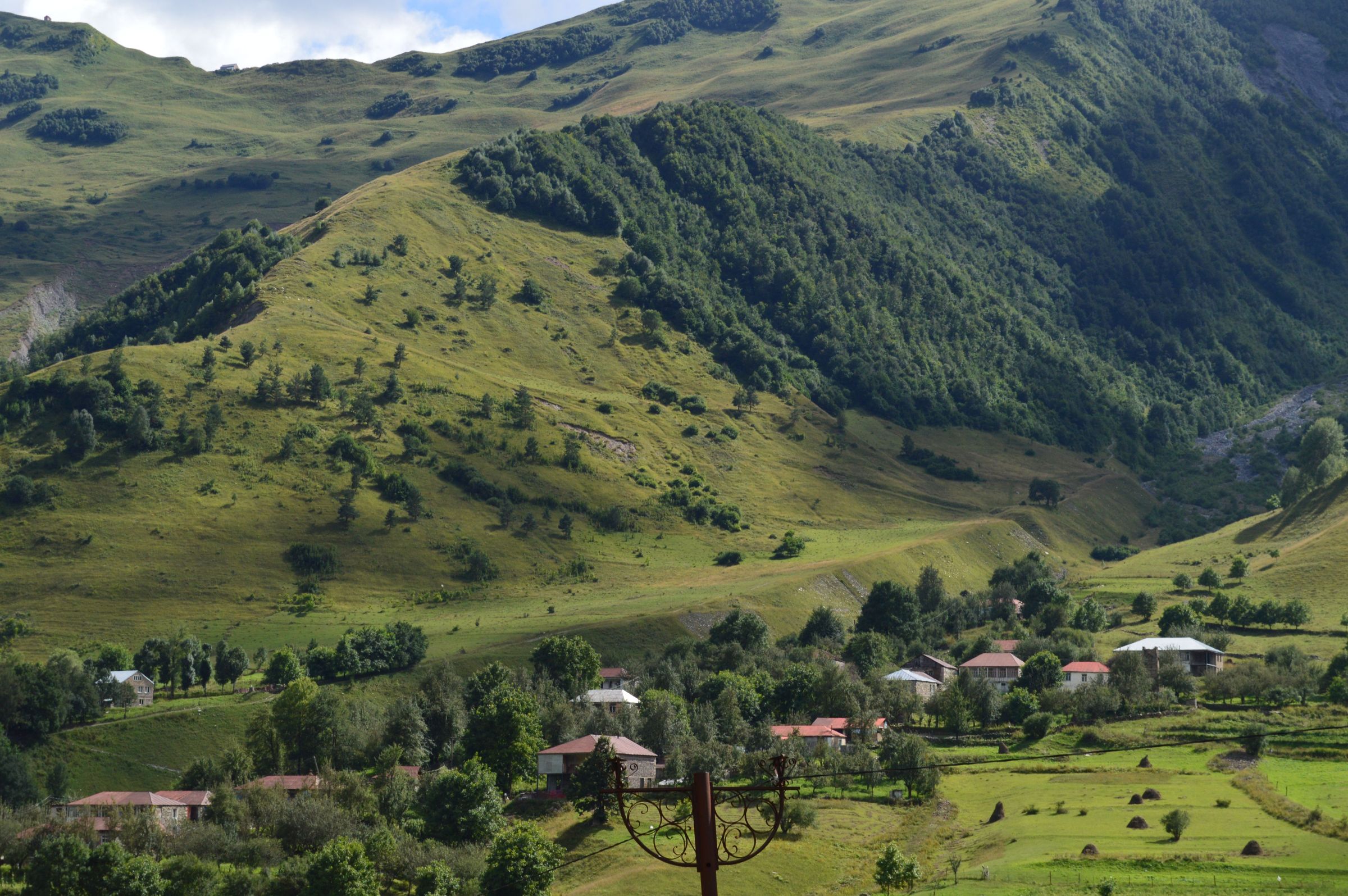
Mestia
Where medieval towers pierce the Caucasus sky
A country of vineyards, watchtowers and high Caucasus light — told slowly, booked with care.
Svaneti is Georgia's high Caucasus region of medieval Svan tower-houses, glacier-fed valleys and Europe's highest permanently inhabited villages. Base yourself in Mestia, the regional hub with the museum, cable cars and onward transport, then push to Ushguli and the glacier trails for the region's real drama. Give it a minimum of three days; a week lets you add the Mestia–Ushguli trek.
Svaneti holds two of Georgia's defining superlatives in one region: Ushguli, among Europe's highest permanently inhabited settlements, and Shkhara, the country's highest peak at 5,203 metres, visible from the same churchyard. No other Georgian region packs that much elevation and living medieval architecture into one valley system.
The atlas holds 54 documented wonders here — alpine area, church, fortress, glacier, lake, mountain, museum, pass. Base yourself in Mestia and radiate outwards; nothing below is more than a day away.
Begin with these — then wander. Each card is a doorway, not a checklist.
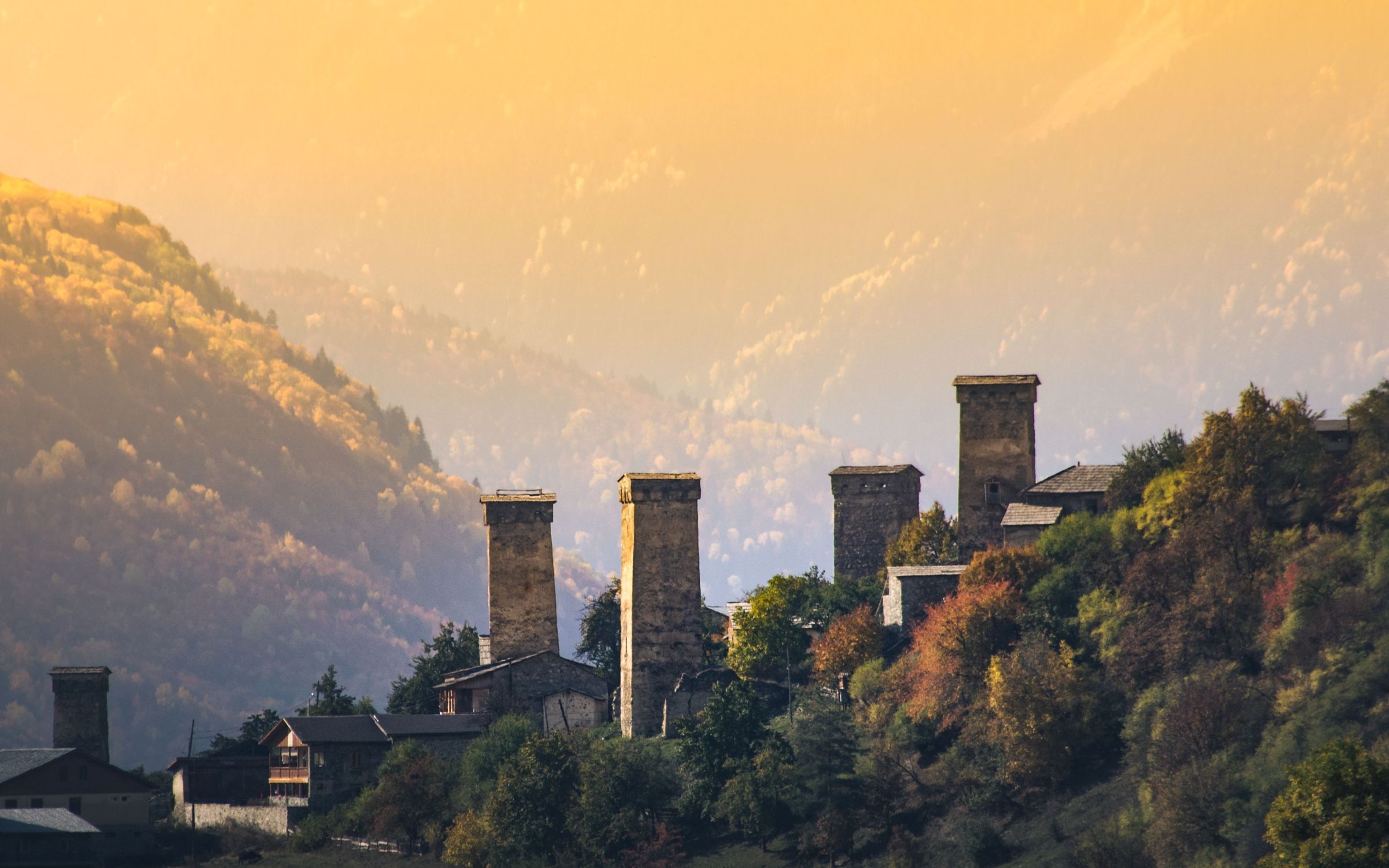
Where medieval towers pierce the Caucasus sky
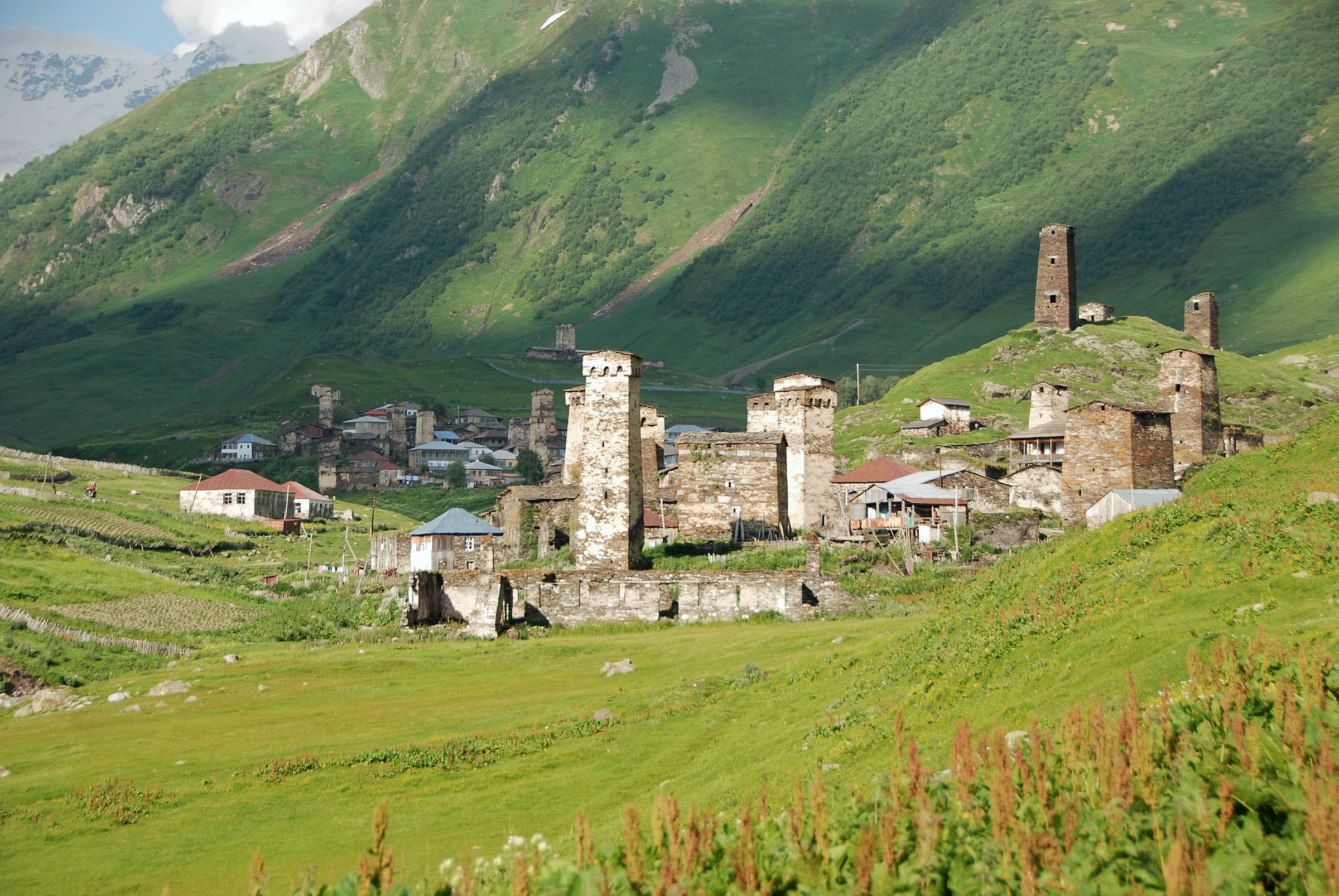
Where stone towers touch the clouds
Where Ushba's twin thrones face you fully
Svaneti's gentle giant of golden meadows
Svaneti's unguarded gateway, where towers still watch
Gateway to Lechkhumi's wild heights
Where Racha's wine hills meet Svaneti's stone towers
Where Svaneti's two halves once whispered across stone
Where mountain faith burns eternal
Lone sentinel of Tamar's mountain realm
Medieval towers guarding the Caucasus
Ski above medieval towers in the Caucasus
Curated, not crowded. Our editors’ orders of merit — updated with the seasons.
Mestia — arrivals, markets and the best spread of places to sleep.
Every wonder below is pinned on the national atlas with live availability beside it.
Every booking removes one tonne of CO₂ — folded in, never added at the end.
Reach Mestia by daily marshrutka from Tbilisi (9-10 hours) or Zugdidi (3-4 hours, fully paved since 2010), or by domestic flight from Natakhtari when weather permits — flights are frequently cancelled in poor visibility, so don't build a tight schedule around one. Once in Mestia, onward travel to Ushguli, Mazeri and other villages generally requires a 4WD taxi or organised transfer arranged through guesthouses; there is no reliable public transport to the outlying villages. The core hiking and driving season runs June to September, when mountain passes and river crossings are open; roads to Ushguli and Mazeri close under snow from roughly November to April. Ski season at Hatsvali and Tetnuldi runs December to March. Guesthouses, not hotels, are the standard accommodation outside Mestia itself, and in villages like Adishi they should be booked ahead since there are no formal hotels.
Three days covers Mestia and a day trip to Ushguli comfortably. A week or more lets you add the multi-day trek to villages like Adishi that the road network doesn't reach, plus side trips to Chalaadi Glacier and Koruldi Lakes.
Yes — it's the region's single most complete experience, combining an intact medieval tower village, Europe's highest continuous settlement, and a direct view of Shkhara's glacier from the churchyard. Most visitors rank it above everything else in Svaneti.
The road to Ushguli and the trail to Adishi typically close under snow from November to April. Mestia itself stays open year-round and switches focus to skiing at Hatsvali and Tetnuldi through the winter months.
Marked day hikes like Chalaadi Glacier and Koruldi Lakes are manageable independently with a map and reasonable fitness. Multi-day treks and any off-trail glacier approaches are best done with a local guide, given the unmarked river crossings and weather that can change quickly at altitude.
Most travellers arrange a 4WD taxi through their guesthouse rather than self-drive, since the Mestia-Ushguli track and similar roads are rough and unmarked. Shared taxis to popular villages are usually easy to organise on short notice in season.
High passes, wine roads, and the slow coast — open the national atlas and plot a generous route.
See Svaneti on the atlas →Late spring and September–October bring harvest light, open high roads, and terrace weather. Winter is for ski villages and sulphur baths; high summer belongs to the Black Sea. Shoulder months reward the unhurried.
Many travellers enter visa-free for a generous stay. Always confirm current entry rules for your passport before you book — then spend the saved hour on a long lunch.
Marshrutka minibuses, comfortable coaches, a handful of trains, and hired drivers cover most ground. Mountain roads ask for daylight and patience. Build slack into every itinerary.
Every booking removes 1 tonne of CO2 — no surcharge. It is included, not optional, and never an excuse to travel carelessly. Stay longer; spend locally; tread lightly on alpine meadows.
In cities and guesthouses, yes — and a few words of Georgian open every door. Look for the script; it is part of the landscape. Menus often arrive in three languages, like this site.
25 August 2026 · reviewed quarterly