Why go
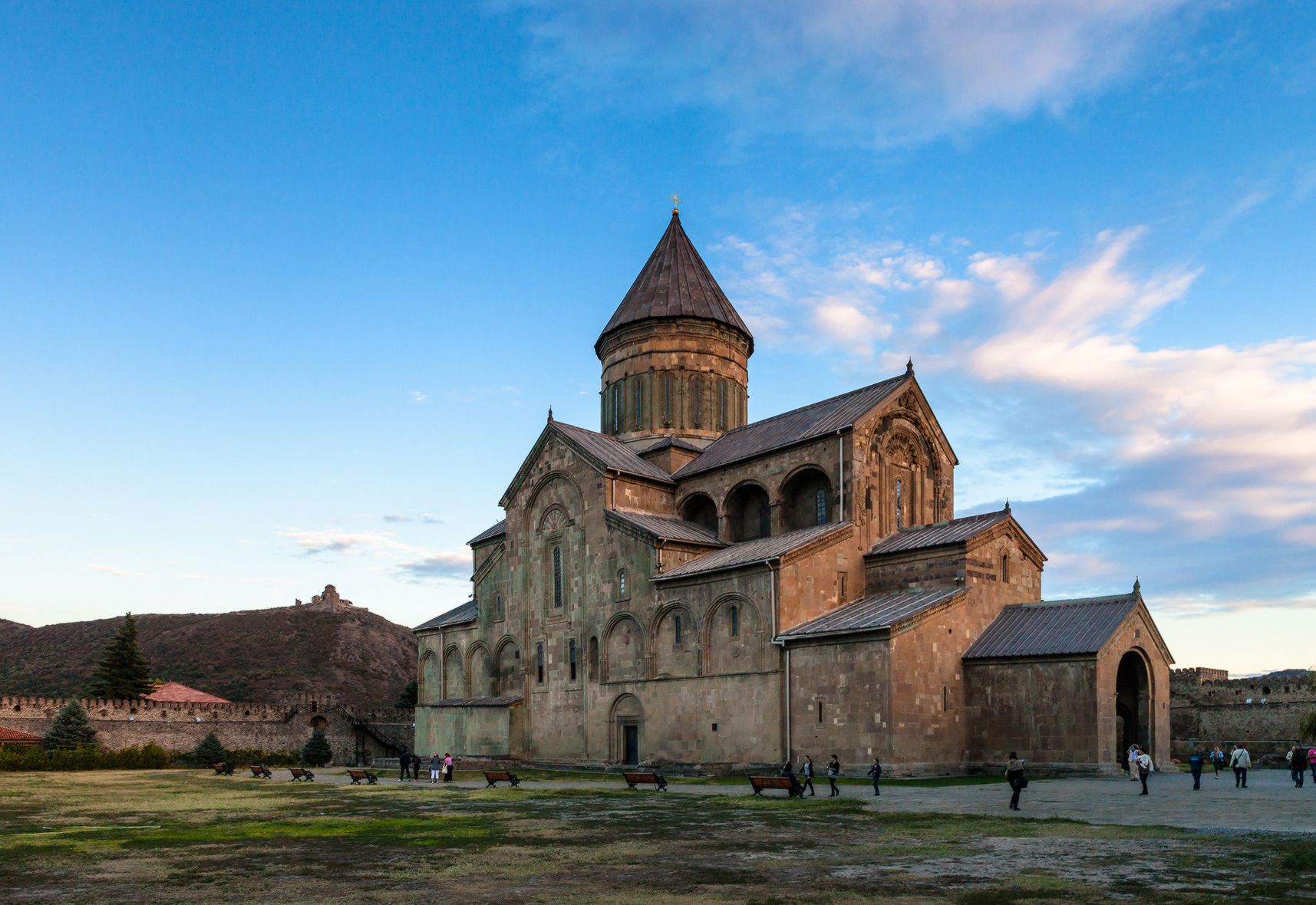
Svetitskhoveli rises from the confluence of the Mtkvari and Aragvi rivers as Georgia's spiritual heartbeat, founded in 1010 by architect Arsukisdze under King George I. The name means 'Life-Giving Pillar'—legend holds that a sacred cedar grew from the grave of Sidonia, who died clutching Christ's seamless robe, brought here by her brother Elias in the 1st century. The pillar that once stood there, said to cure the sick, was enclosed within the cathedral's walls. Burial site of Georgian kings, coronation church, and a masterpiece of early medieval architecture with its cruciform plan and carved stone façades, it remains a living place of pilgrimage where Georgian Orthodox Christianity has pulsed for a millennium.