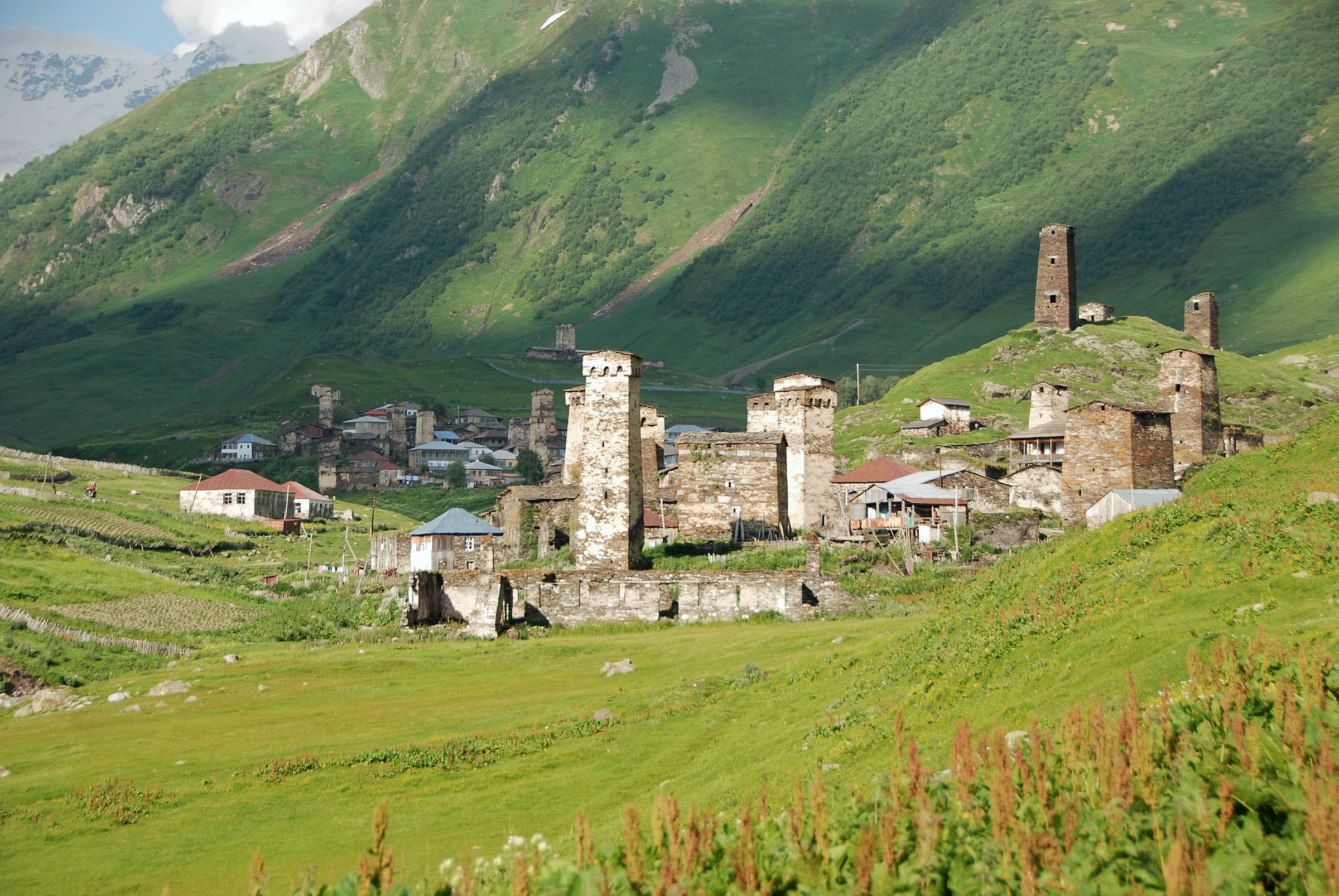
Why go
Etseri sits where the Zugdidi–Mestia highway begins its ascent into the UNESCO-listed highlands, yet remains curiously untouched by the trekker hordes that pack Mestia. This Western Svan village preserves the same defensive tower architecture as its famous neighbors—stone sentinels built by clans between the 9th and 12th centuries to guard against invaders and blood feuds—but here they stand amid walnut groves and cornfields rather than ski lifts. The community sustained itself through transhumance and sophisticated medieval irrigation systems still visible in the terraced hillsides. Etseri offers what Mestia has largely lost: the sound of cowbells rather than café playlists, and Svan families who receive guests as neighbors rather than customers. It is the threshold where lowland Samegrelo's humid subtrophy yields to alpine Svaneti, and where travelers can still encounter the living culture that elsewhere has become performance.