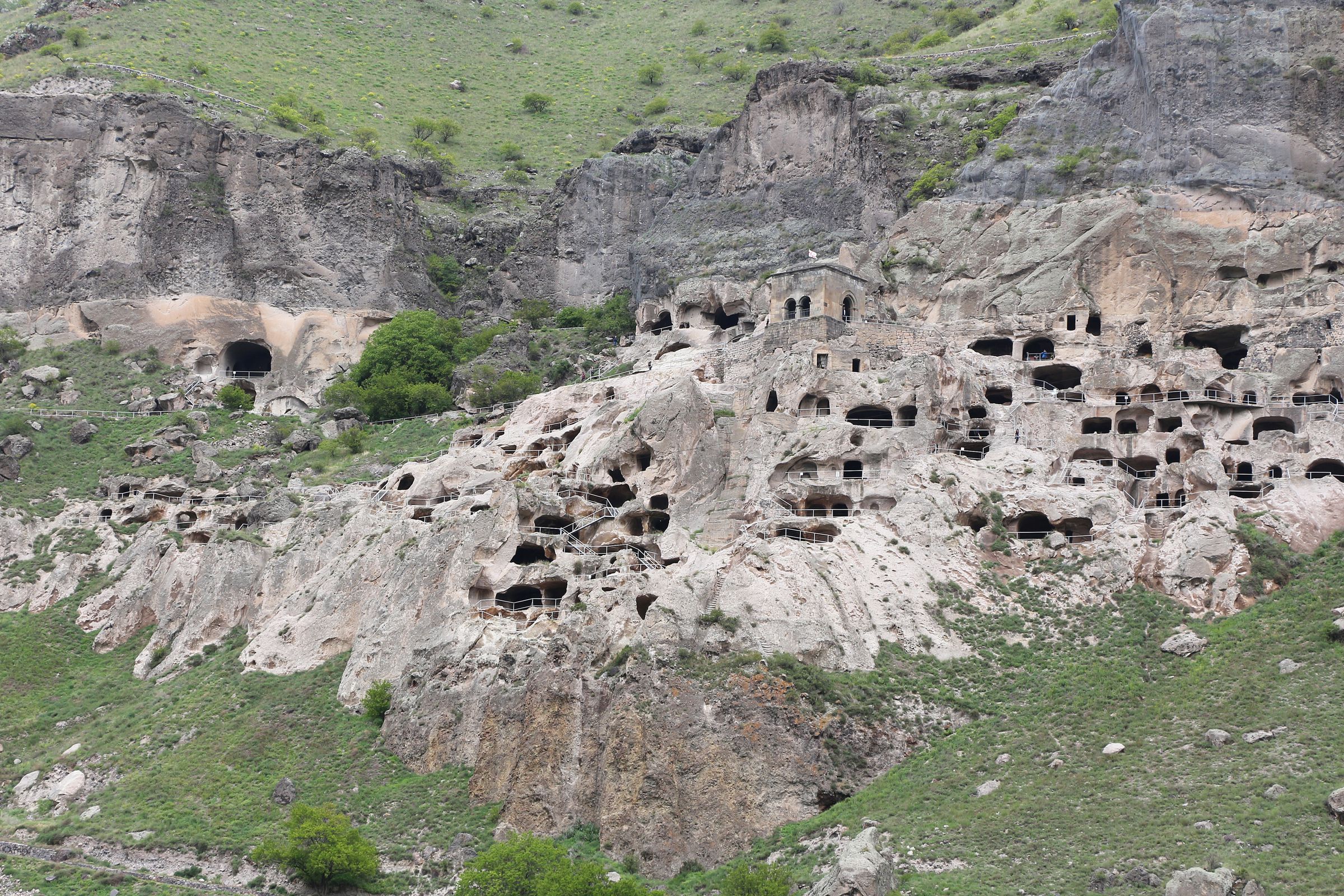
Tsromi Church

Where stone defies gravity and empire

Tsromi Church

Tsromi rises from the Kura River plain as a masterpiece of seventh-century engineering—one of the first churches anywhere to place a dome on a square base using pendentives, solving the architectural puzzle that would define Byzantine sacred space for centuries. Built shortly after the Arab invasions devastated nearby Mtskheta, it carries the urgency of a culture reclaiming its sacred ground. The exterior stonework reveals the hands of early medieval masters: precise ashlar joints, carved window frames, and fragments of figurative sculpture that survived iconoclasm and earthquake alike. What moves the traveler is the interior silence beneath the dome, where light falls through narrow apertures onto bare stone, unchanged since the age of belief.

On the ground See

  • The transitional pendentive structure supporting the dome, a revolutionary architectural solution predating Hagia Sophia's influence in the region
  • Seventh-century stone carving fragments embedded in the north and south walls, including decorative window surrounds and possible figural remains
  • The Kura River valley view from the church grounds, placing the structure within its strategic medieval landscape between Mtskheta and the eastern marches

Practical Know before you go

Best visited April through October; located 16km northwest of Khashuri, accessible via paved road from the Tsromi village turnoff, with limited public transport—private vehicle or arranged taxi from Gori or Khashuri recommended.

Last reviewed 25 August 2026 · reviewed quarterly