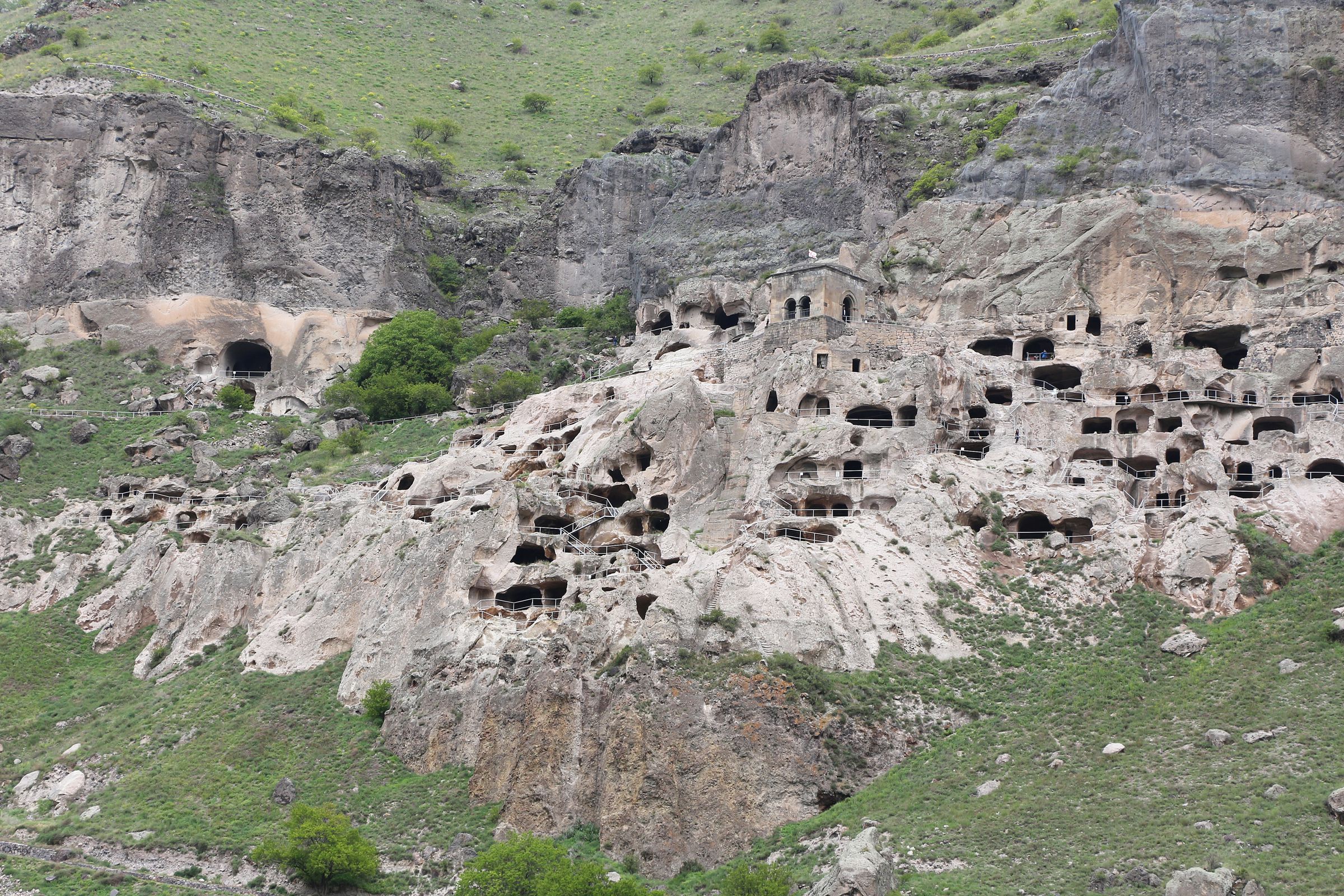
Why go
Kintsvisi Canyon cradles one of Georgia's most exquisite yet overlooked medieval treasures: the 13th-century Kintsvisi Monastery, a jewel of late Golden Age fresco painting that survived Mongol destruction thanks to its remote forest sanctuary. The canyon itself is a limestone gorge where the Dzama River has carved swimming holes and smooth rock shelves beneath hanging walnut and hornbeam woods. Unlike the crowded canyons of Imereti, this remains genuinely quiet—hikers share trails with shepherds and the occasional monk from the small working community still resident at the monastery. The combination of accessible wilderness and transcendent Byzantine art is rare; you can swim at noon and stand before 800-year-old portraits of Queen Tamar's courtiers by afternoon.