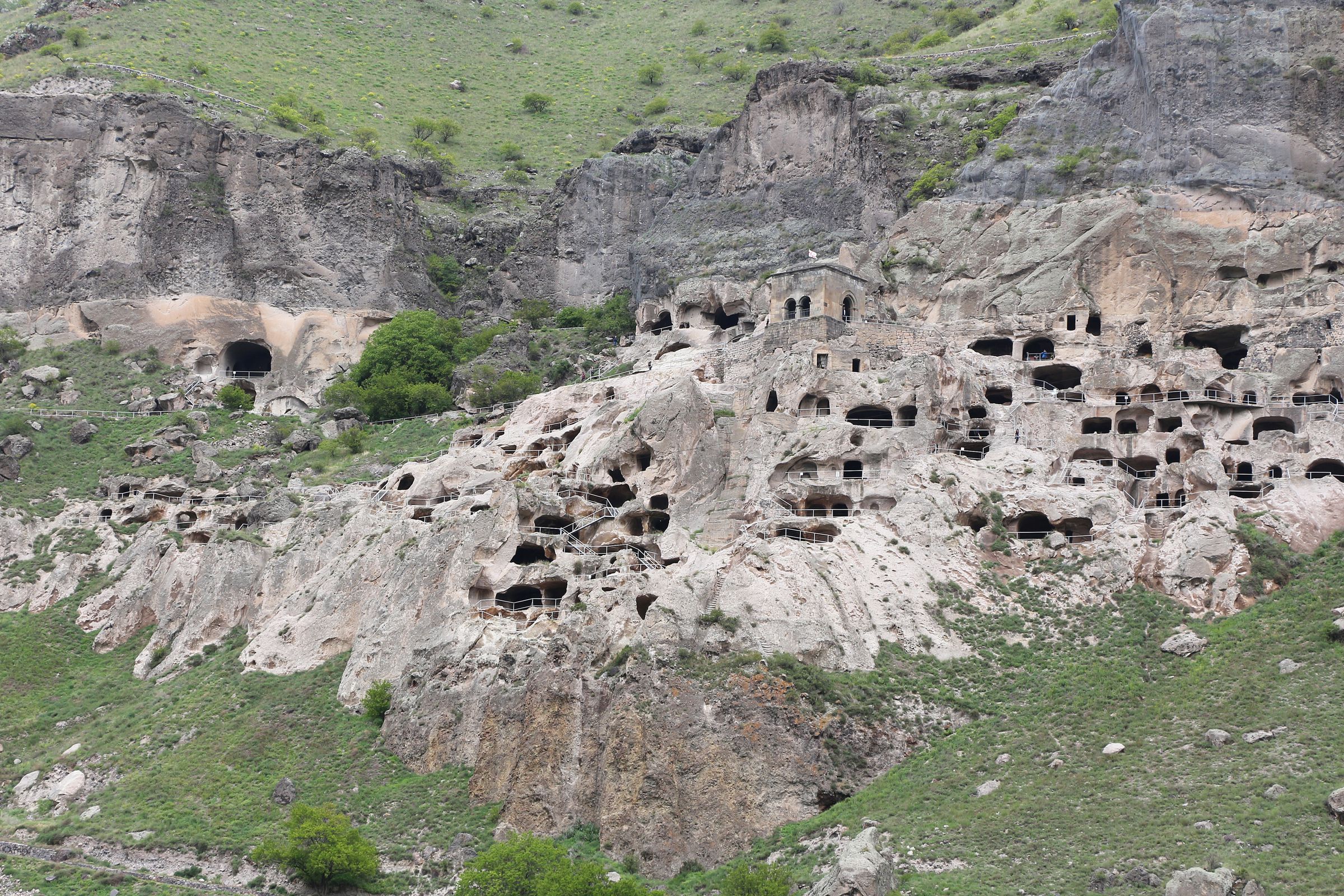
Why go
Surami Fortress rises from a rocky ridge where the Likhi Range splits Georgia in two. For two millennia, whoever held this pass controlled the flow of armies, merchants, and faiths between eastern and western Georgia. The ruins you see today are mostly 16th–18th century, rebuilt after countless destructions—Mongol, Timurid, Ottoman, Persian. A local legend tells of a young man immured alive in its walls so the fortress would stand; his mother brought him wine in a goat-skin, the origin of 'tsisperi qveli'—the cheese still made here. The stones hold Georgia's fractured history: invasions resisted, alliances brokered, identities preserved against empires.