Vanis Kvabebi

A labyrinth of faith carved in silence

Vanis Kvabebi

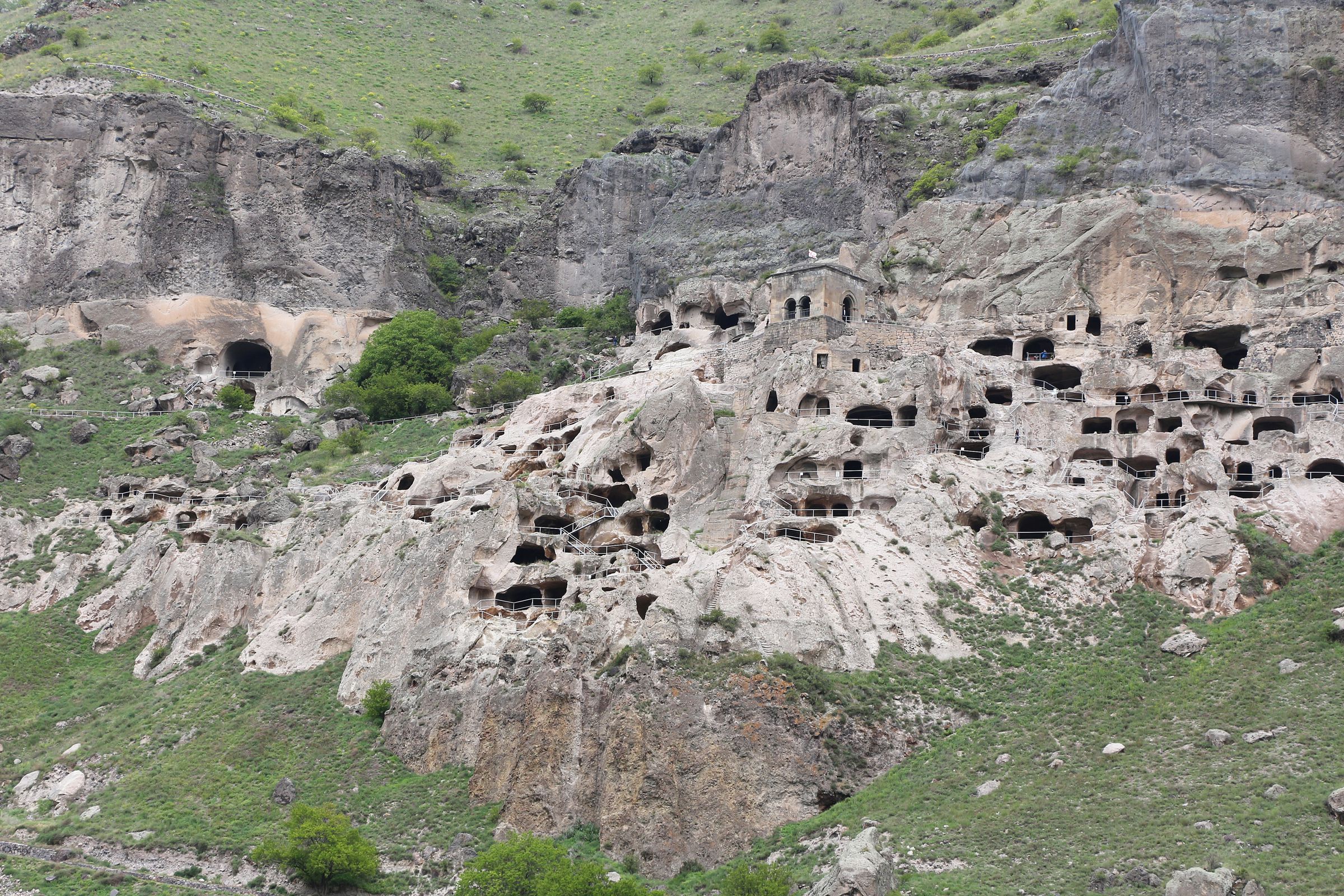
Vanis Kvabebi predates its famous neighbor Vardzia by centuries, a terraced cave monastery where monks hollowed more than 200 cells into a sheer cliff face beginning in the 8th century. Where Vardzia became a royal city, Vanis Kvabebi remained austere and hidden—a six-level vertical maze of chapels, wine presses, and living quarters connected by narrow rock-cut stairways and defensive walls. The site holds Georgia's oldest dated Christian inscription (AD 586) and bears the quiet scars of Mongol destruction and Ottoman abandonment. Its power lies in restraint: no frescoed grandeur, only stone, shadow, and the vertiginous evidence of medieval hermits who chose elevation and hardship over comfort. You climb through their rooms.

On the ground See

  • The six-tiered cave system with original rock-cut stairways connecting residential cells, storage niches, and a ruined 10th–11th century stone church at the summit
  • The defensive fortification walls and towers built by Tamar's commanders in the 12th–13th centuries, merging military architecture with monastic seclusion
  • The small 10th century chapel of St. George with its original stone altar and the nearby rock inscription dating to AD 586, among Georgia's earliest Christian textual evidence

Practical Know before you go

Best visited April–October; the final approach requires a steep 20-minute uphill walk from the village of Khertvisi, and the upper levels demand sure footing on uneven stone steps—combine with nearby Vardzia and Khertvisi Fortress for a full day.

Last reviewed 25 August 2026 · reviewed quarterly