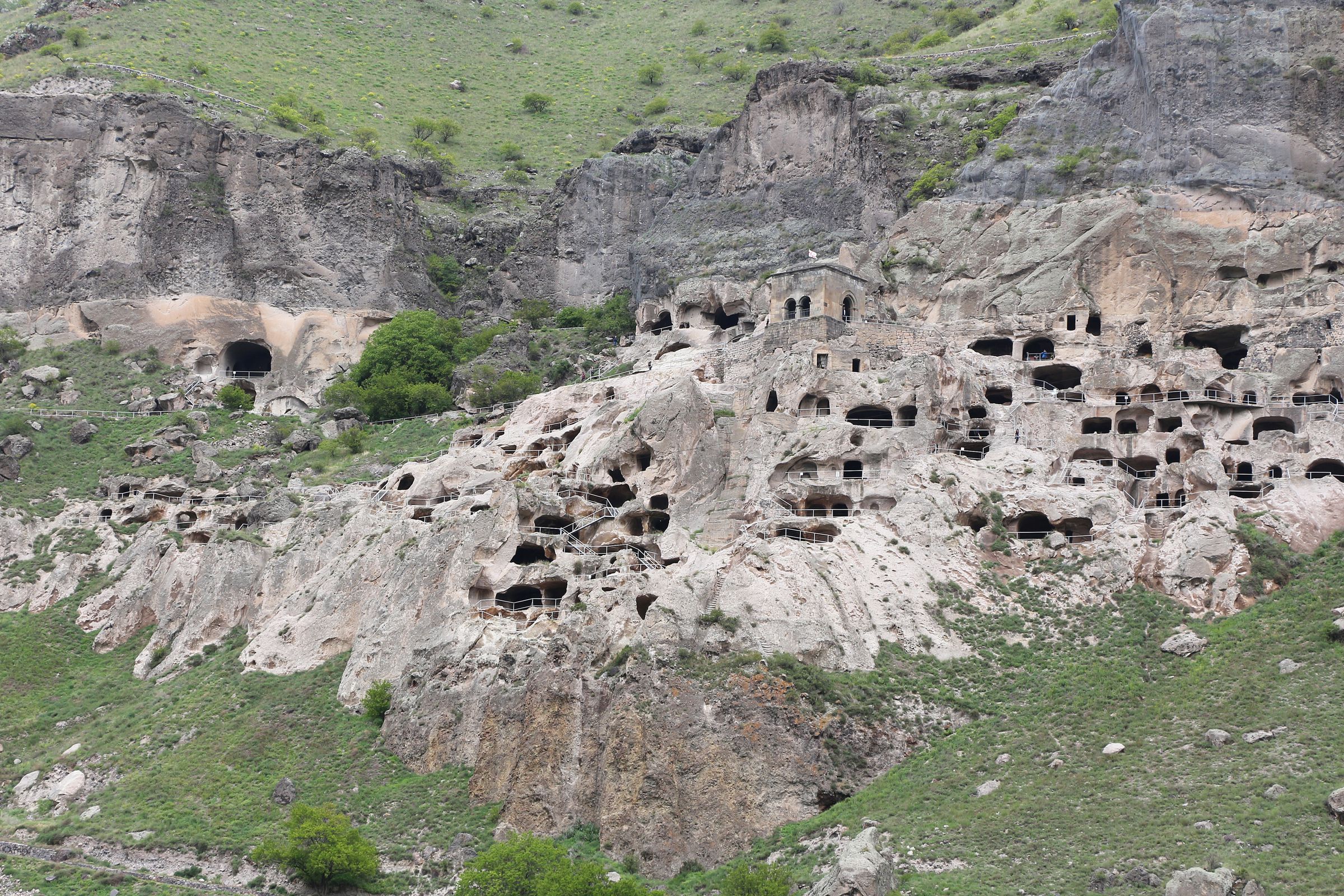
Why go
Sapara Monastery clings to a forested mountainside near Akhaltsikhe, its origins tracing to the 9th century though it flourished under the Jakeli family in the 13th–14th centuries. The jewel is St. Saba's Church, built in the late 1200s, whose interior preserves rare medieval frescoes including a striking portrait of the church's patron, Saba Jakeli, and a monumental Christ Pantocrator. The monastery served as a cultural and political center of the Samtskhe region, and its remote setting spared it from destruction that claimed many Georgian monuments. The surviving paintings represent a crucial period of Georgian artistic synthesis, blending Byzantine and local traditions.