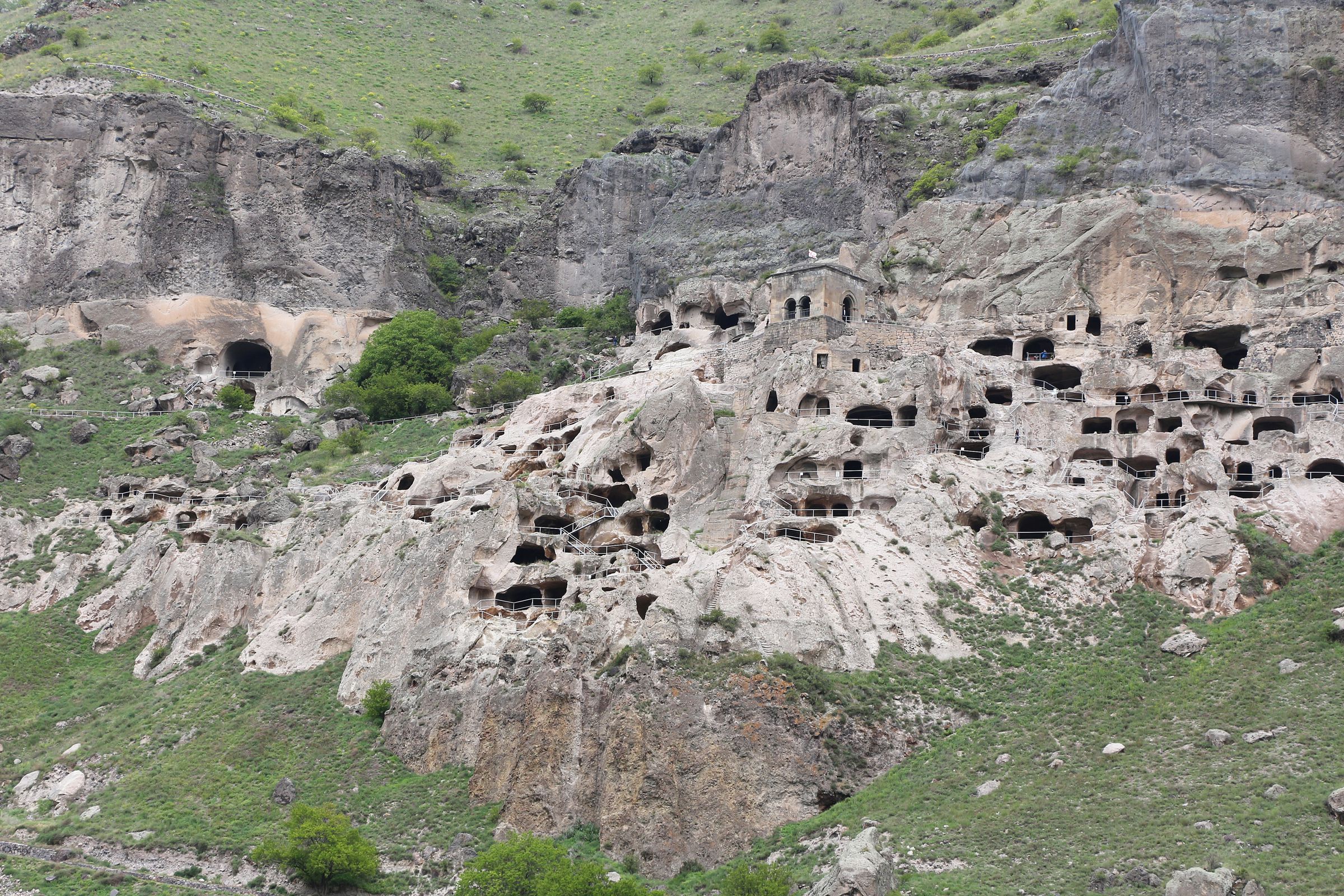
Vanis Kvabebi Cave Monastery

Where monks tunneled through stone to survive

Vanis Kvabebi Cave Monastery

Vanis Kvabebi is a 8th-9th century rock-cut monastery complex clinging to a cliff face above the Mtkvari River gorge, predating and physically connected to the more famous Vardzia. Its labyrinth of caves—churches, monks' cells, wine presses, and a secret tunnel—were carved for refuge during Arab invasions and later Mongol raids. The defensive walls and narrow passages speak to centuries of spiritual resilience. Unlike Vardzia's grand scale, Vanis Kvabebi rewards the curious with intimate exploration: you crawl through the same escape tunnel monks used, trace their footsteps in worn stone stairs, and stand in a cruciform church where light filters through a single carved window. It is Georgia's cave architecture in its rawest, most evocative form.

On the ground See

  • The 150-meter secret tunnel carved through solid rock connecting Vanis Kvabebi to the Vardzia complex, requiring flashlight and crawling in sections
  • The 10th-century Church of St. George with its carved altar and faded fresco fragments, plus the wine press cut into bedrock showing monastic self-sufficiency
  • The multi-level defensive walls with narrow arrow slits and the monks' cells with stone sleeping platforms, illustrating how the community lived under siege

Practical Know before you go

Best visited April-October; combine with Vardzia (2km by road, connected by hiking trail); wear sturdy shoes for uneven stone and bring a flashlight for tunnel sections.

Last reviewed 25 August 2026 · reviewed quarterly