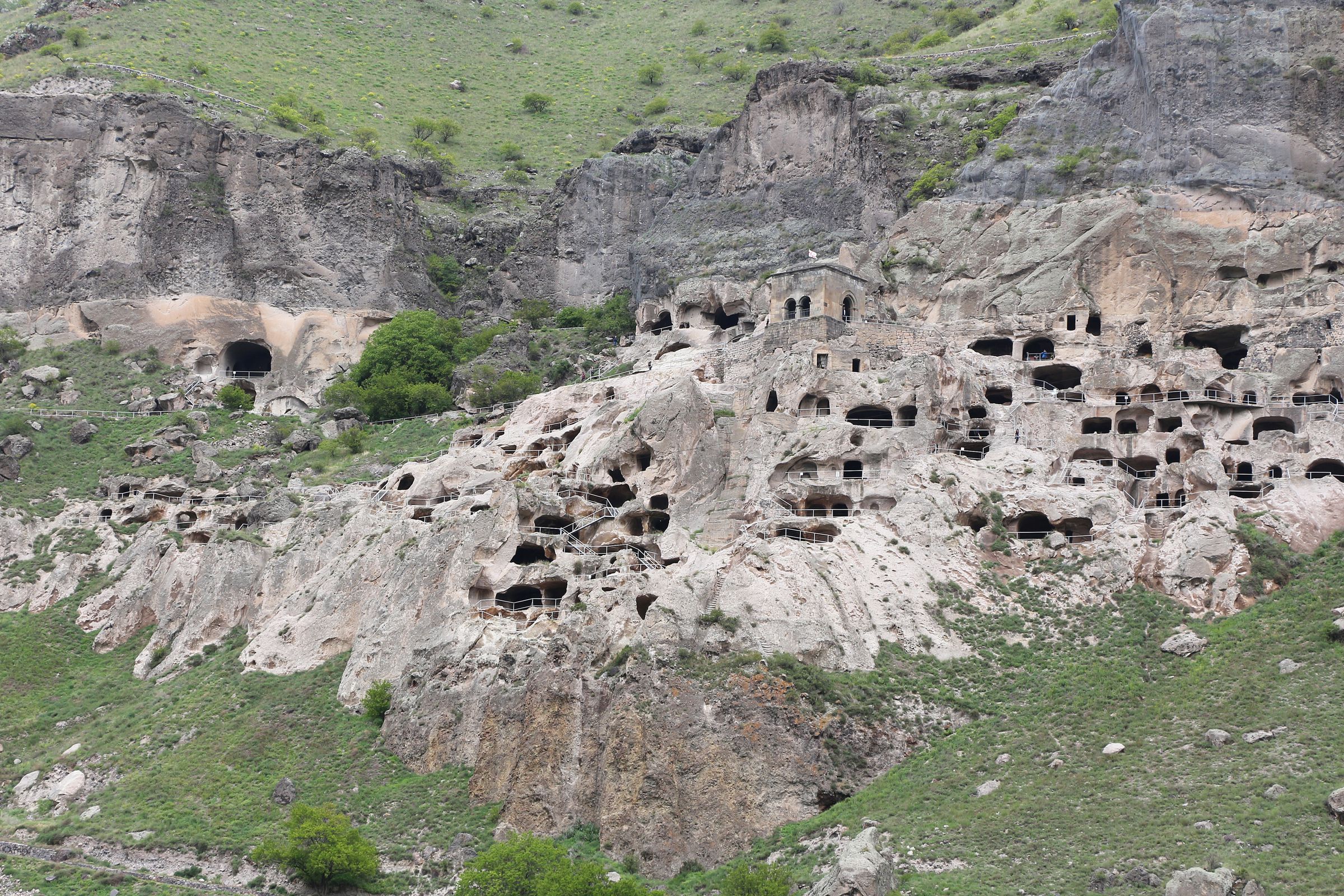
Atskuri Fortress

Crimson cliffs guard ancient river power

Atskuri Fortress

Atskuri commands a dramatic bend of the Mtkvari River where sheer rose-tinted limestone walls rise 300 meters above the water. Built between the 10th and 13th centuries, this fortress anchored the defensive system of the Samtskhe nobility, controlling the vital trade corridor linking Byzantium, Armenia, and the Caucasian interior. The Mongols seized it in 1236; later it passed between Georgian kings and Ottoman forces. What remains—crumbling towers, cisterns, and arrow-slit walls—delivers raw medieval atmosphere without reconstruction or crowds. You climb through wild grasses and apricot scrub to stand where sentries once watched caravans and armies alike, the river looping below in a gorge that turns gold at sunset.

On the ground See

  • The 11th-century domed church of St. George inside the fortress walls, its stone worn smooth by centuries of prayer and weather
  • The cistern system carved into bedrock, demonstrating how garrisons survived prolonged sieges in this arid terrain
  • The northern watchtower foundations for panoramic views across the Mtkvari gorge toward the Lesser Caucasus range

Practical Know before you go

Best visited April-June or September-October; no public transport serves the site—hire a driver in Akhaltsikhe (30km) or combine with Vardzia and Sapara monastery on a southern Georgian circuit.

Last reviewed 25 August 2026 · reviewed quarterly