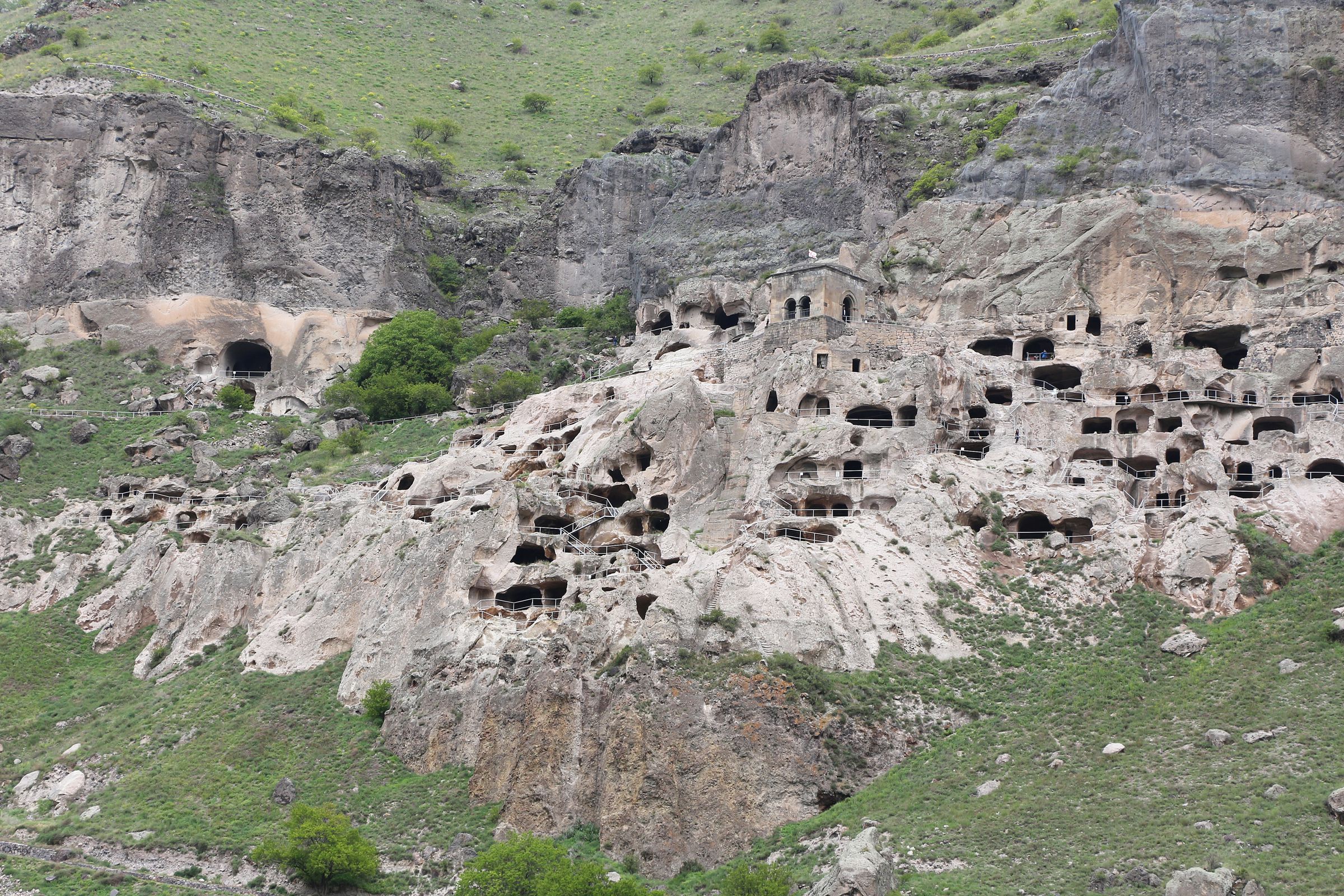
Kumurdo Cathedral

Where Georgian stone first reached for heaven

Kumurdo Cathedral

Kumurdo Cathedral rises from a highland plateau as one of Georgia's most architecturally audacious achievements. Built in 964 under King Bagrat III's patronage, it represents a pivotal moment: the earliest surviving use of pointed arches in Georgian ecclesiastical architecture, predating their European Gothic proliferation by centuries. The mastery is in the details—finely carved window surrounds, geometric stone lattice work, and inscriptions naming the architect Saba and builder Gabriel. Abandoned for centuries, its 2015 restoration revealed how Georgian builders solved structural problems through innovation rather than imitation. The cathedral stands as proof that Georgia's medieval golden age was not provincial but genuinely pioneering.

On the ground See

  • Examine the east façade's pointed arch windows, whose load-bearing sophistication allowed unprecedented interior height and light
  • Study the carved stone cornices and window frames bearing the names of craftsmen who worked here in 964
  • Walk the surrounding plateau for views toward Paravani Lake and the volcanic Javakheti highlands that shaped this isolated building culture

Practical Know before you go

Best visited May through October; 30km southwest of Akhaltsikhe via paved then gravel roads, with no regular public transport—hire a driver in Akhaltsikhe or combine with nearby Sapara Monastery.

Last reviewed 25 August 2026 · reviewed quarterly