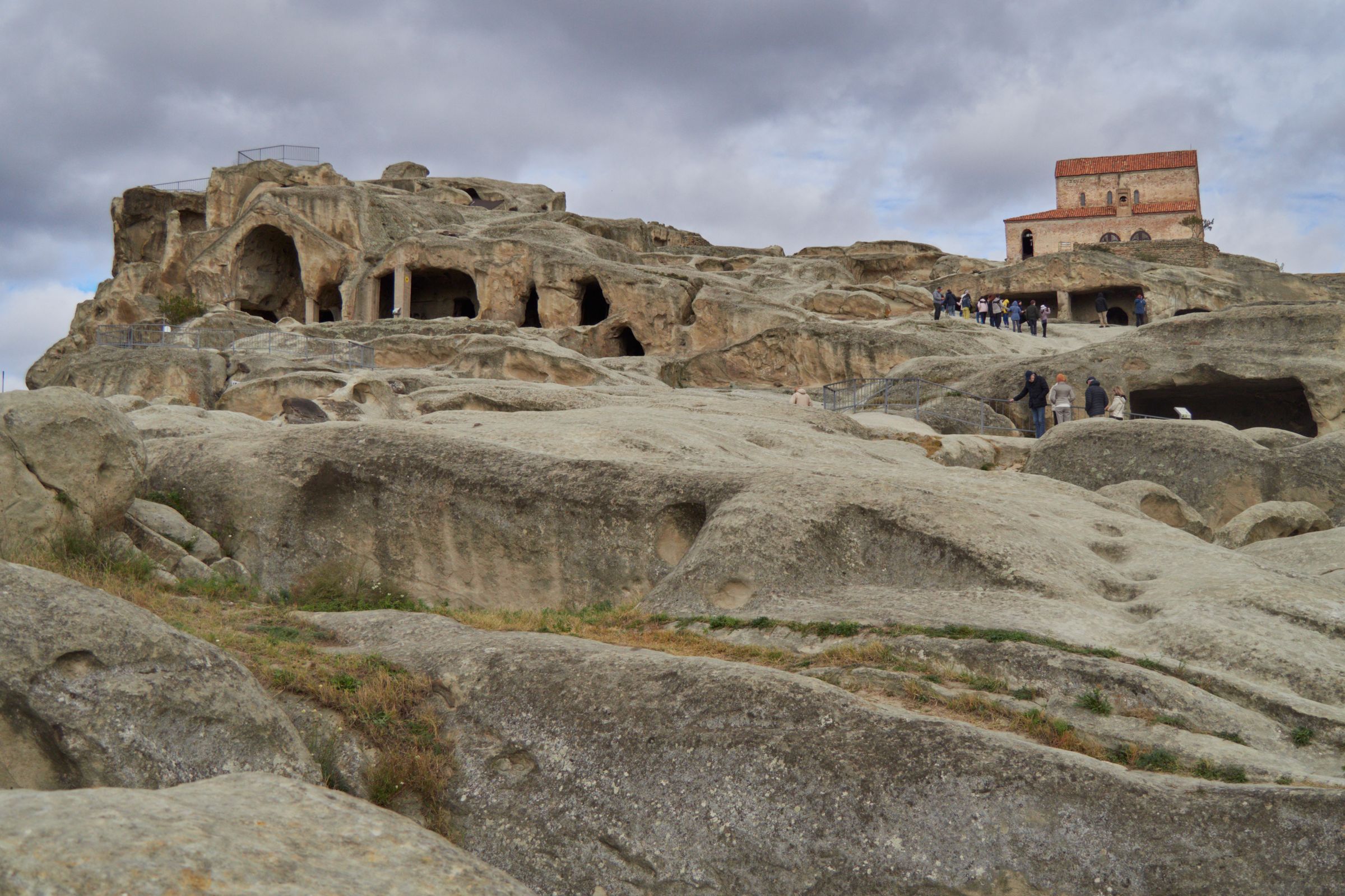
Kintsvisi Monastery

Sapphire walls in a forgotten valley

Kintsvisi Monastery

Kintsvisi is a 13th-century monastery hidden in the Kintsvisi River valley, built during Georgia's Golden Age under Queen Tamar. Its fame rests on frescoes painted around 1205-1206, commissioned by Queen Tamar's courtier Anton Gnolistavisdze—extraordinary for their lapis-lazuli blues, a pigment as costly as gold that glows with almost supernatural depth. The images of the Virgin and Archangels show Byzantine technique fused with Georgian spiritual intensity. The monastery survived Mongol devastation of the region, likely because its remote location made it invisible from the main roads. Today it sits in profound stillness, surrounded by walnut groves, with fresco colors undimmed by eight centuries—one of the most significant surviving medieval painting programs in the Caucasus.

On the ground See

  • The north wall fresco of the Virgin and Child flanked by Archangels, where the lapis-lazuli background creates an immersive celestial field
  • The 13th-century refectory with its original stone tables and the remains of monastic wine storage vessels set into the floor
  • The small chapel of St. Nino adjoining the main church, containing fragmentary but emotionally direct 14th-century frescoes of the saint's life

Practical Know before you go

Best visited April–June or September–October; from Gori, drive 18km southeast on the Kintsvisi road, then walk 10 minutes from the parking area—no public transport reaches the site, so arrange a driver or join a tour from Tbilisi.

Last reviewed 25 August 2026 · reviewed quarterly