Dmanisi Fortress

Where medieval walls guard humanity's ancient origins

Dmanisi Fortress

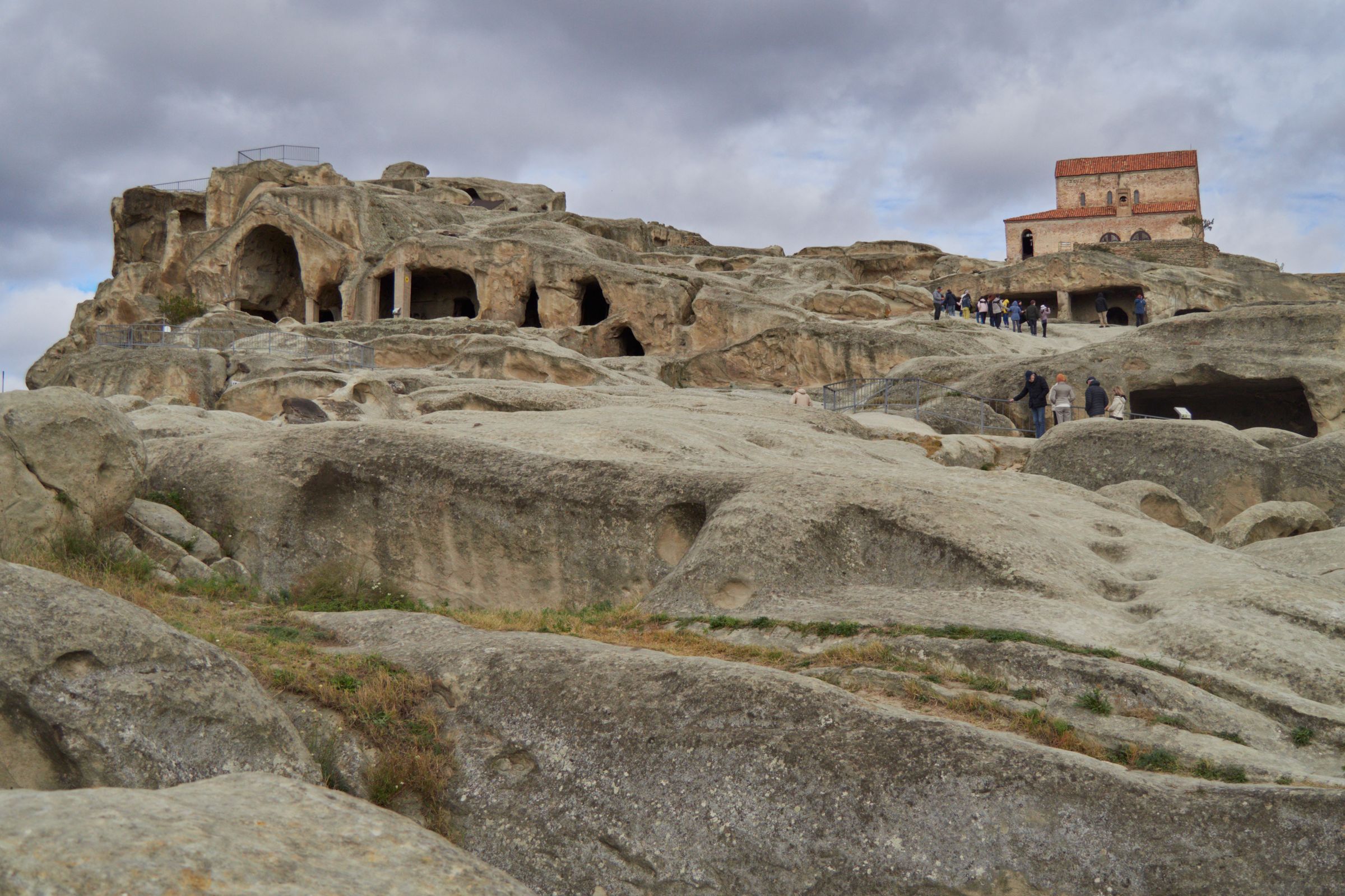
Dmanisi Fortress crowns a dramatic basalt promontory overlooking the confluence of the Mashavera and Pinezauri rivers, a strategic stronghold guarding the Silk Road since at least the 9th century. Its ruined walls and collapsed domes speak of centuries of Georgian kings, Mongol destruction, and Ottoman occupation. Yet this site holds deeper secrets: beneath the fortress lies one of the world's most significant paleoanthropological sites, where 1.8-million-year-old Homo erectus fossils—skulls, tools, and remains of early humans who left Africa—were unearthed starting in 1991. These 'Dmanisi hominins' rewrote theories of human migration. You stand where medieval traders once feared ambush, directly above the oldest known human presence outside Africa.

On the ground See

  • Wander the fortress ruins themselves—collapsed domed chambers, cisterns, and curtain walls with views across the semi-desert Kvemo Kartli landscape
  • Visit the small on-site archaeological museum displaying casts of the famous Dmanisi skulls and original stone tools from the excavations
  • Descend to the active excavation areas beneath the citadel, where paleontologists continue unearthing early human and animal fossils in the ancient strata

Practical Know before you go

Best visited April–June or September–October; the site lies 85km southwest of Tbilisi via the E60 highway, with infrequent marshrutka service from Tbilisi's Didube station to Dmanisi town, then a 2km walk or taxi to the fortress.

Last reviewed 25 August 2026 · reviewed quarterly