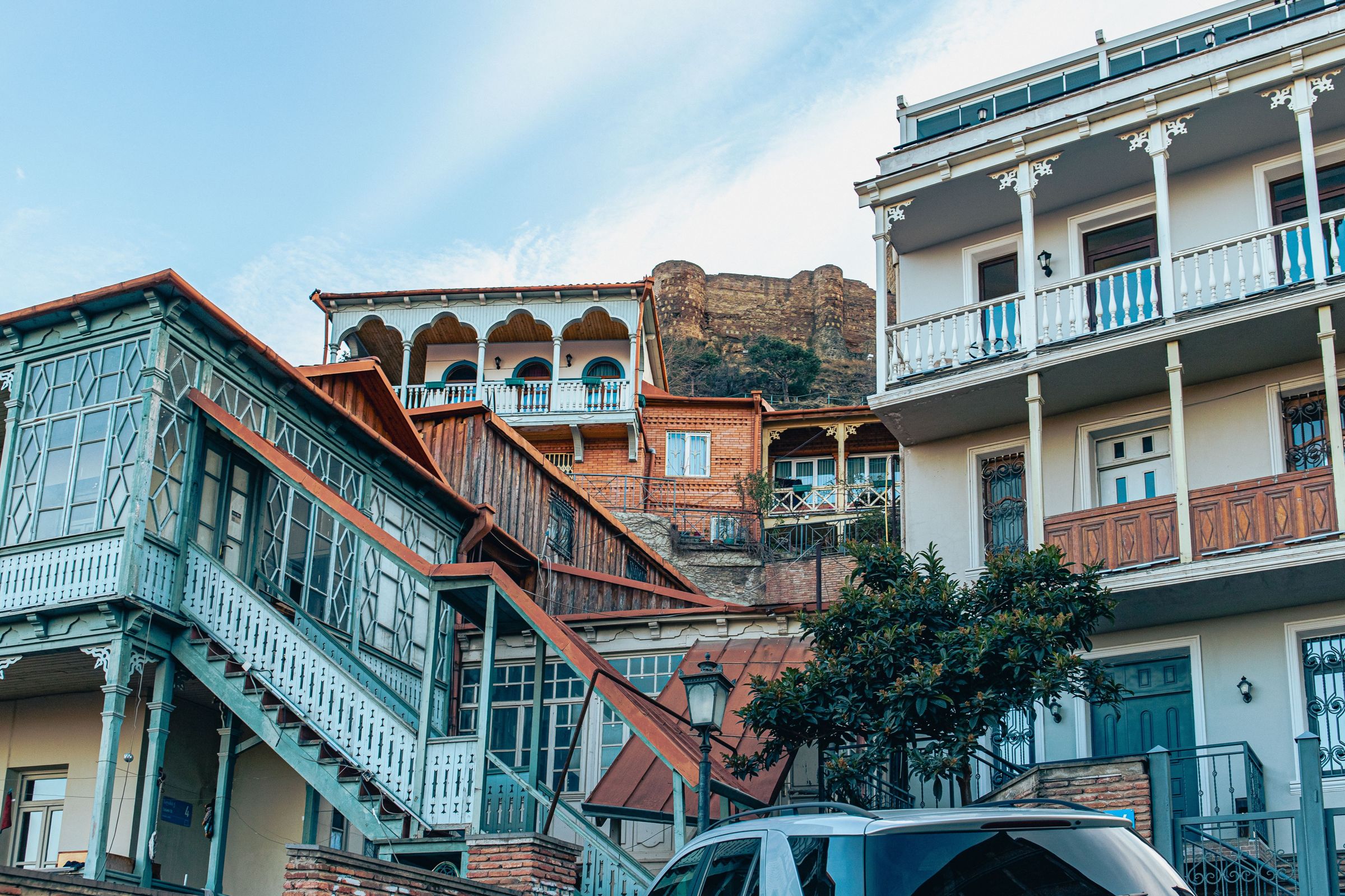
Armazi Church

Where ancient kingdoms meet painted light

Armazi Church

Armazi Church crowns a ridge above the Mtkvari River, built upon the ruins of Armazi, the vanished capital of Iberia—one of the earliest Georgian kingdoms. The small cruciform church dates to the 7th–8th centuries, though heavily restored. Inside, faded but arresting medieval frescoes survive: a rare Deesis composition and fragments of donor portraits. The site commands the strategic Aragvi River gorge, the very corridor that carried armies, merchants, and faith between Europe and Asia. You stand where pagan temples once stood, where the first Georgian Christians may have prayed, where silence now holds layers of erased power.

On the ground See

  • The 7th–8th century church interior with surviving medieval frescoes, including a damaged but discernible Deesis scene
  • The archaeological remains of ancient Armazi fortress and acropolis scattered on the ridge below
  • The sweeping confluence view of the Mtkvari and Aragvi rivers from the churchyard

Practical Know before you go

Best visited spring through autumn; reached by a rough 3km track uphill from the main Mtskheta–Stepantsminda highway, requiring sturdy footwear and preferably a 4WD or arranged local transport.

Last reviewed 25 August 2026 · reviewed quarterly