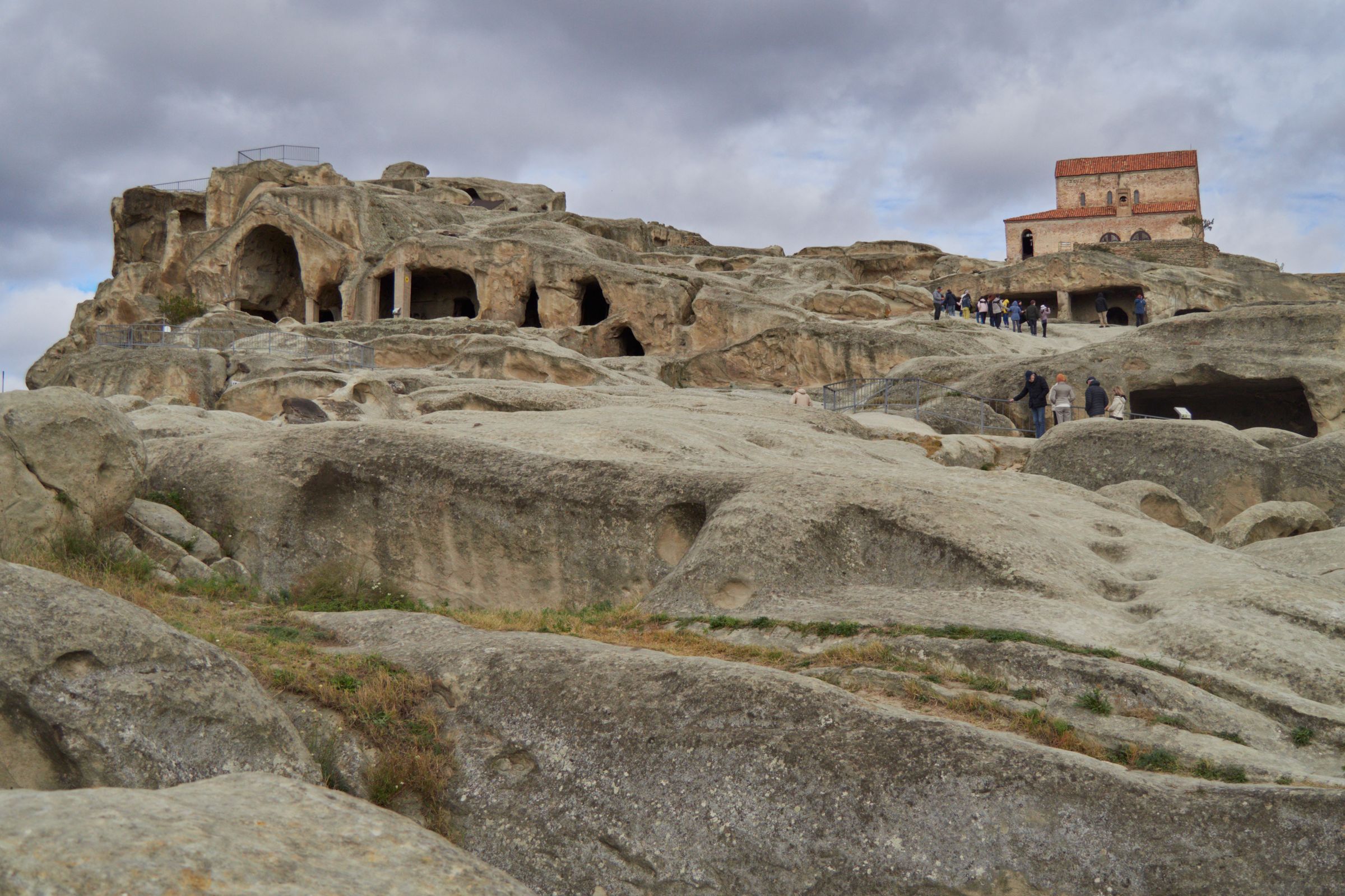
Uplistsikhe Cave Town

Where stone breathed with civilization

Uplistsikhe Cave Town

Uplistsikhe is one of the oldest urban settlements in the Caucasus, a rock-hewn city that flourished from the Early Iron Age through the late medieval period. Carved into honey-colored sandstone cliffs above the Mtkvari River, its labyrinth of caves once housed a population of thousands, with streets, a pillared hall for pagan rituals, a 9th-century three-aisled basilica, and even a sophisticated drainage system hewn from stone. The site reveals layers of Georgian history: pagan temple, Silk Road trading post, refuge during Mongol invasions. Standing in its silent amphitheater or the wine press carved deep into rock, you grasp how entire lives unfolded in these chambers—birth, worship, commerce, death—long before Tbilisi existed.

On the ground See

  • The Great Hall, a 10-meter-long rock-cut chamber with two massive stone columns that once supported a wooden roof, serving as the city's pagan temple and later Christian church
  • The ancient wine press and grain pits carved into the cliff face, evidence of sophisticated agricultural processing dating to the Hellenistic period
  • The 9th-century three-aisled basilica built at the cliff's edge, its stone facade contrasting with the older caves and marking Christianity's triumph over earlier beliefs

Practical Know before you go

Open year-round; 10 km east of Gori in Shida Kartli, reachable by marshrutka or taxi from Gori (20 minutes), with sturdy footwear essential for uneven stone paths and steep climbs.

Last reviewed 25 August 2026 · reviewed quarterly