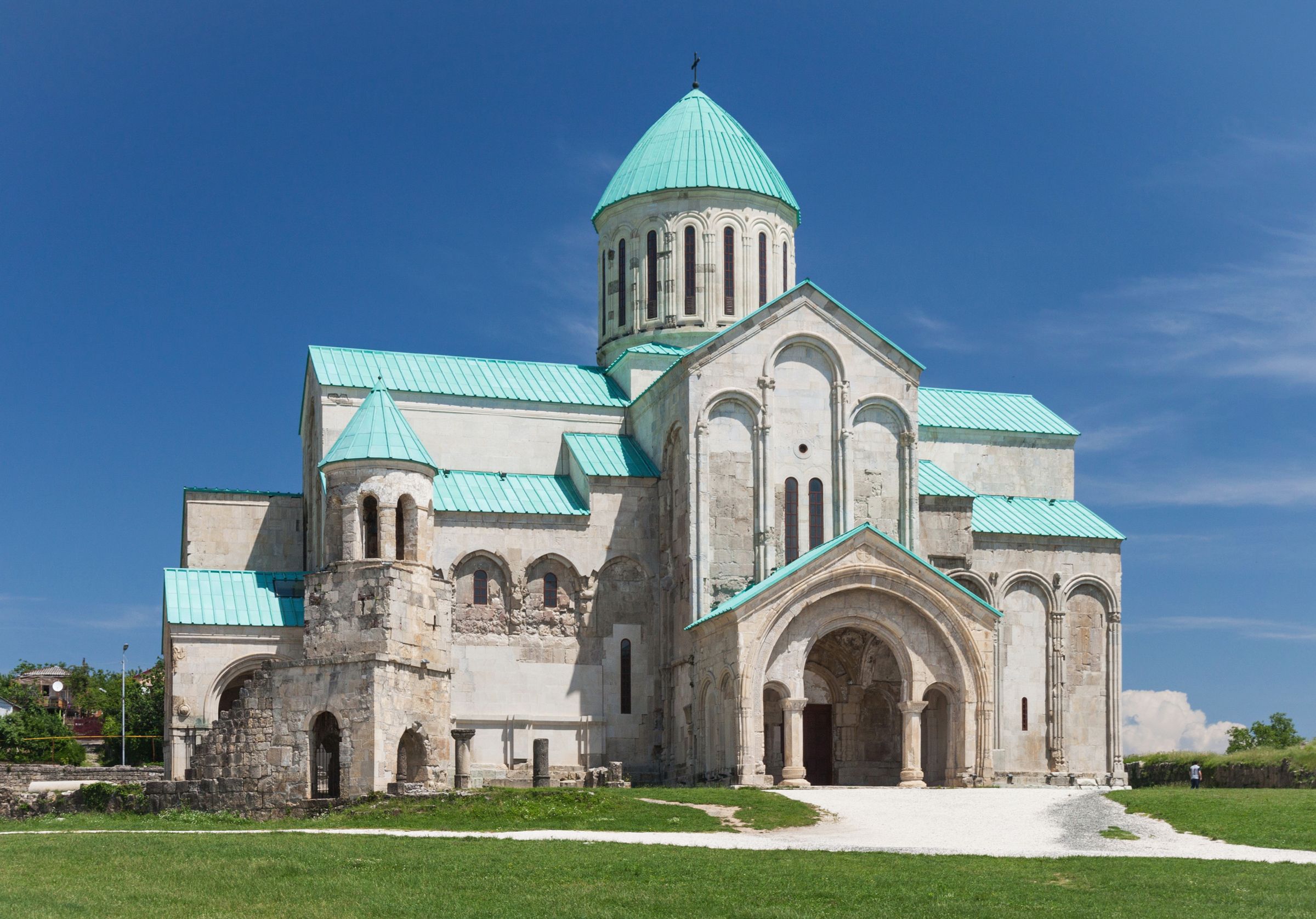
Why go
Motsameta clings to a limestone promontory above the Tskaltsitela River's rust-colored gorge, where in the 8th century, Arab invaders martyred brothers David and Constantine Mkheidze—nobles who refused to renounce Christianity. Their relics, recovered from the river below, rest in a silver sarcophagus within the 11th-century church, drawing pilgrims who crawl three times beneath it for healing. The monastery's name means 'place of the martyrs.' Its isolation is absolute: the only approach winds through walnut forests and past abandoned Soviet-era factories before the gorge opens beneath you. The church's rough-hewn stone and faded frescoes feel untouched by time, while the river's ceaseless churn below creates a solitude that explains why monks have endured here for twelve centuries.