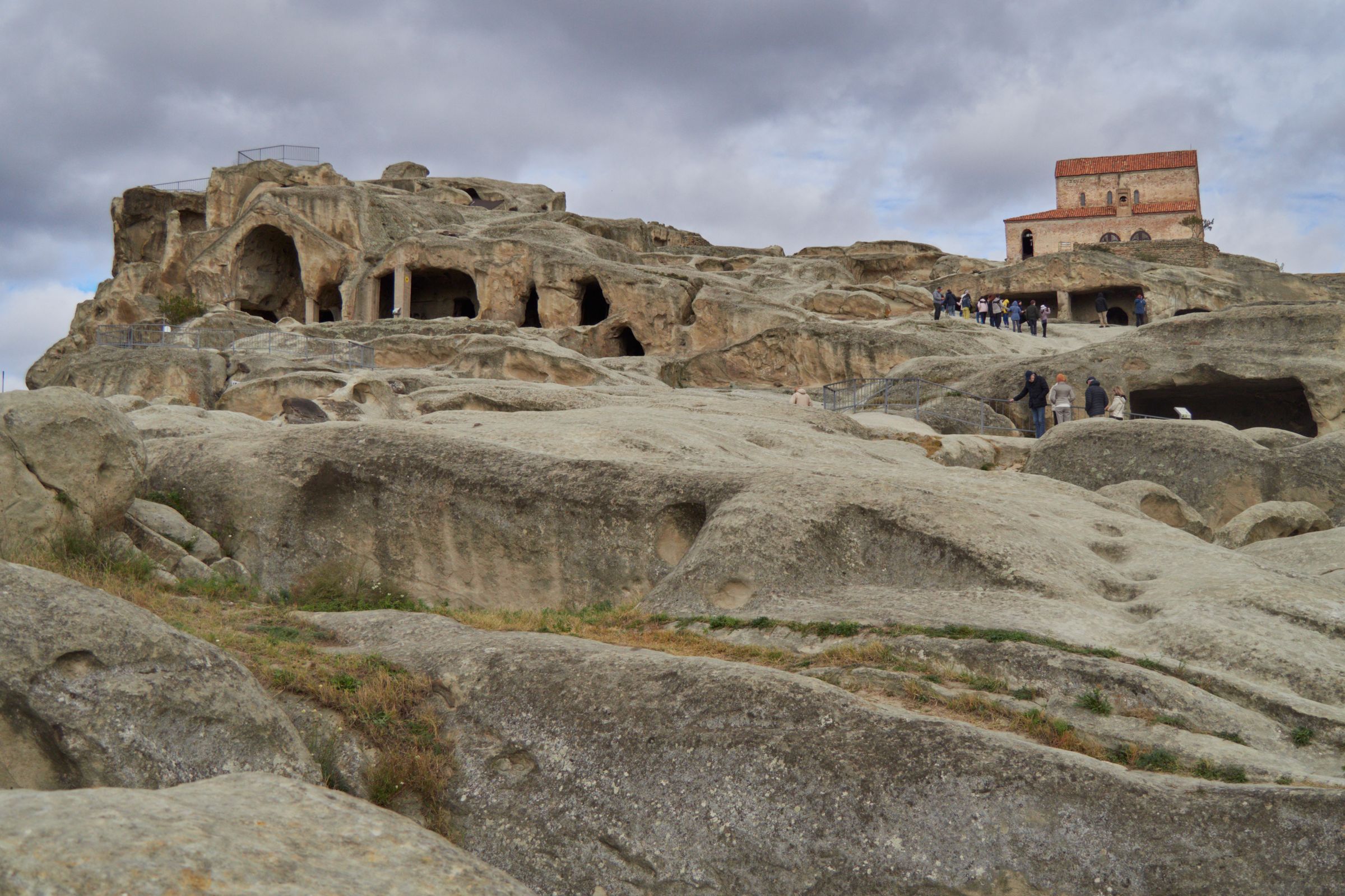
Why go
Grakliani Gora rises above the Lekhura River near Igoeti, in Shida Kartli, as one of the most consequential archaeological sites in the Caucasus. Here, excavations revealed a 7th-century BCE temple complex with altars and sacrificial platforms, alongside inscriptions that represent the earliest known examples of written Georgian—predating the established alphabet by centuries. The site demonstrates remarkable continuity: Bronze Age layers yield obsidian tools and burial mounds, while Iron Age strata show sophisticated stone architecture and cultural exchange with Urartu and Assyria. For travelers, Grakliani offers rare intimacy with deep time—no ropes, no crowds, just wind-scoured stones where priests once burned offerings and scribes carved symbols that would become a nation’s voice.